Vitamin D is the supplement people take because they read one article in winter. It is also one of the few where a blood test can tell you whether you need it at all. The rest is label reading.
Most pills are D3, the form your skin makes. D2 is plant-based and less potent at raising blood levels. Both are fat-soluble, so they are better absorbed with a meal that contains some fat. K2 shows up on more labels every year; the evidence for adding it is interesting but not settled.
The other complication is the number. Vitamin D is sold in IU and micrograms, and the two are easy to confuse. Twenty-five micrograms is 1,000 IU. Fifty micrograms is 2,000 IU. A bottle that sounds mild can be four times stronger than the one next to it.
The short version#
Thorne Vitamin D/K2 Liquid is the flexible option, with a clear D3 dose and K2 in the same serving. Nordic Naturals Vitamin D3 is the simplest softgel and includes oil. Ritual Essential is for people who want D inside a multivitamin. NOW D3 is the budget bottle.
The short list#
Thorne Vitamin D/K2 Liquid
Best for adjusting a dose after a blood test
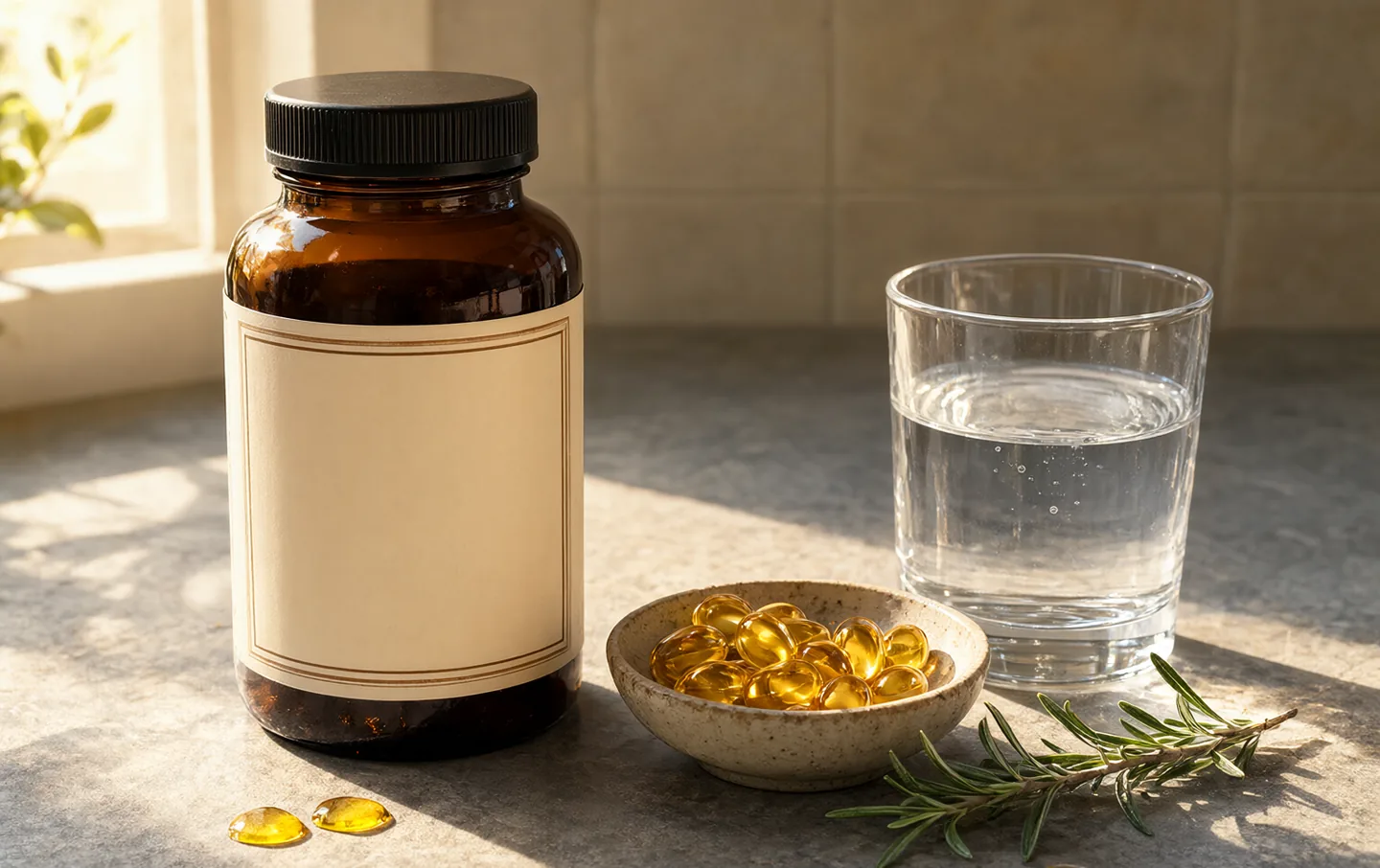
Thorne's liquid pairs 25 mcg (1,000 IU) of D3 with 200 mcg of K2 per serving. The liquid format makes it possible to take a smaller or larger amount than a fixed capsule allows, which is useful if a clinician has given you a target based on a blood test. The base is oil, so it fits the advice to take vitamin D with fat.
Liquid dosing is easy to miscount, and the bottle is small. K2 is not necessary for everyone, and if you take a blood thinner, talk to your clinician before buying it. The price is high for a vitamin.
Buy it if you want adjustable dosing and do not mind measuring. Do not buy it because K2 is on the label; buy it because the dose fits.
What works
- 1,000 IU D3 per serving
- Includes 200 mcg K2
- Liquid format allows adjustment
- Oil base
What doesn't
- Easy to miscount
- Expensive for a vitamin
- K2 is not for everyone
- Small bottle
Nordic Naturals Vitamin D3
Best for a fixed daily dose with built-in fat
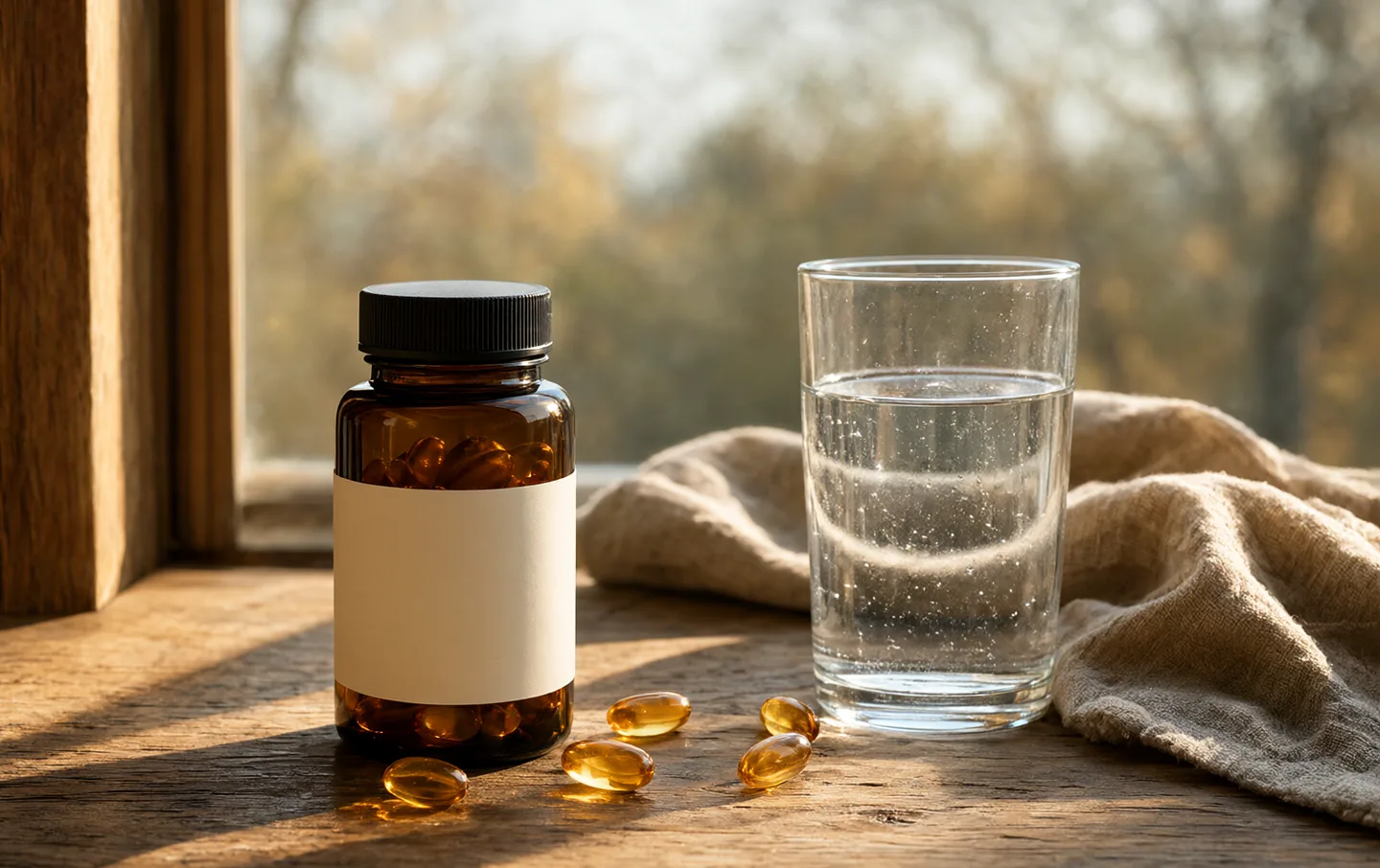
Nordic Naturals D3 comes in 1,000 IU softgels with olive oil, which supplies the fat that helps absorption. The oil is non-GMO and third-party tested, and the softgel is small. The vitamin D comes from lanolin, so it is not vegan.
The dose is fixed, which is fine if 1,000 IU is your target and frustrating if it is not. There is no K2, and no sport certification. Nordic sells higher-strength versions, but check the number rather than the brand.
Buy it if you want a simple, tested softgel with built-in fat. Do not buy it if you need a precise, adjustable dose.
What works
- 1,000 IU per softgel
- Olive oil base
- Third-party tested
- Small softgel
What doesn't
- Lanolin-derived, not vegan
- Fixed dose
- No K2
- No sport certification
Ritual Essential for Women 18+
Best for people who want D in a short multi
Ritual's Essential for Women 18+ includes 50 mcg (2,000 IU) of D3 in a two-capsule multivitamin. That is a meaningful dose, and it comes with a short list of other nutrients. It is third-party tested, and the sourcing is unusually transparent.
The trade-off is that you cannot adjust the D dose without changing the formula, and the subscription is not for everyone. It contains iron, which may not suit every person. If you already take a multivitamin, check its D number.
Buy it if you want D as part of a short multi. Do not buy it as a dedicated vitamin D supplement.
What works
- 50 mcg (2,000 IU) D3
- Third-party tested
- Transparent sourcing
- Two capsules
What doesn't
- Cannot adjust D alone
- Subscription model
- Contains iron
- Not a dedicated D product
NOW Vitamin D3
Best for a cheap, no-drama dose
NOW's D3 is 1,000 IU per softgel in a base of olive and safflower oil. It is one of the cheapest ways to buy a basic dose, and the softgel is small. The vitamin D is lanolin-derived, so it is not vegan.
The label is simple, but the testing story is thinner than pricier brands: no NSF Certified for Sport, no USP mark. That does not make it unsafe; it means you are trusting the company's quality control. The softgel also contains fillers some people avoid.
Buy it if you want a cheap, straightforward dose. Do not buy it if you want a certification to lean on.
What works
- 1,000 IU per softgel
- Olive and safflower oil base
- Inexpensive
- Small softgel
What doesn't
- No third-party seal
- Lanolin-derived
- Contains fillers
- Limited testing transparency
What to check before you swallow#
IU and micrograms are the same thing in different units. One microgram of vitamin D is 40 IU. The bottle may use either, and the serving may be one softgel or two. A "2,000 IU" bottle at a low price is not a bargain if the serving is half a capsule.
D3 raises blood levels more efficiently than D2. Most supplements use D3 from lanolin, a sheep's-wool derivative. Vegan D3 from lichen exists, and it is usually more expensive. D2 is plant-based but less potent; if you choose it, compare the units carefully.
A blood test is the only way to know if you need it. The test is 25-hydroxyvitamin D, and it is a routine request. Latitude, season, skin tone, clothing, sunscreen, age, and body weight all affect how much D you make. Two people on the same street can have very different levels. Without a test, you are guessing.
More is not better. In the United States, the upper limit for adults from supplements is 4,000 IU per day. That is a ceiling, not a target. Very high doses over months can raise blood calcium and cause real harm. A clinician may recommend more for a short period, but that is a clinical decision, not a label instruction. Label rules differ by country, and 'natural' does not mean risk-free.
K2 is not settled science. K2 is involved in calcium metabolism, but the evidence that it keeps calcium out of arteries is not strong enough to pay much extra or to ignore a blood thinner interaction. If you take warfarin, talk to your clinician first.
Questions people actually ask#
Do I need vitamin D if I live in a sunny place?#
Sun exposure varies with latitude, season, skin tone, clothing, and sunscreen. Living somewhere sunny does not mean a high level, and working indoors does not mean a low one. A blood test is the only way to know.
Is vitamin D from the sun better than a pill?#
Your skin makes D3, and a pill is usually D3 as well. The difference is dose control. Sun exposure is hard to measure and carries skin-cancer risk; a supplement is easier to quantify. Neither is a substitute for a clinician's advice.
Can I take too much vitamin D?#
Yes. Very high doses over time can raise blood calcium and cause problems. The US upper limit for adults from supplements is 4,000 IU per day, and more is not better without a clinician's oversight. If you are taking a high dose, ask for a blood test rather than guessing.
Vitamin D is one of the few supplements where the dose should follow a number, not a feeling. Test if you can. Read the micrograms. Take it with a meal.