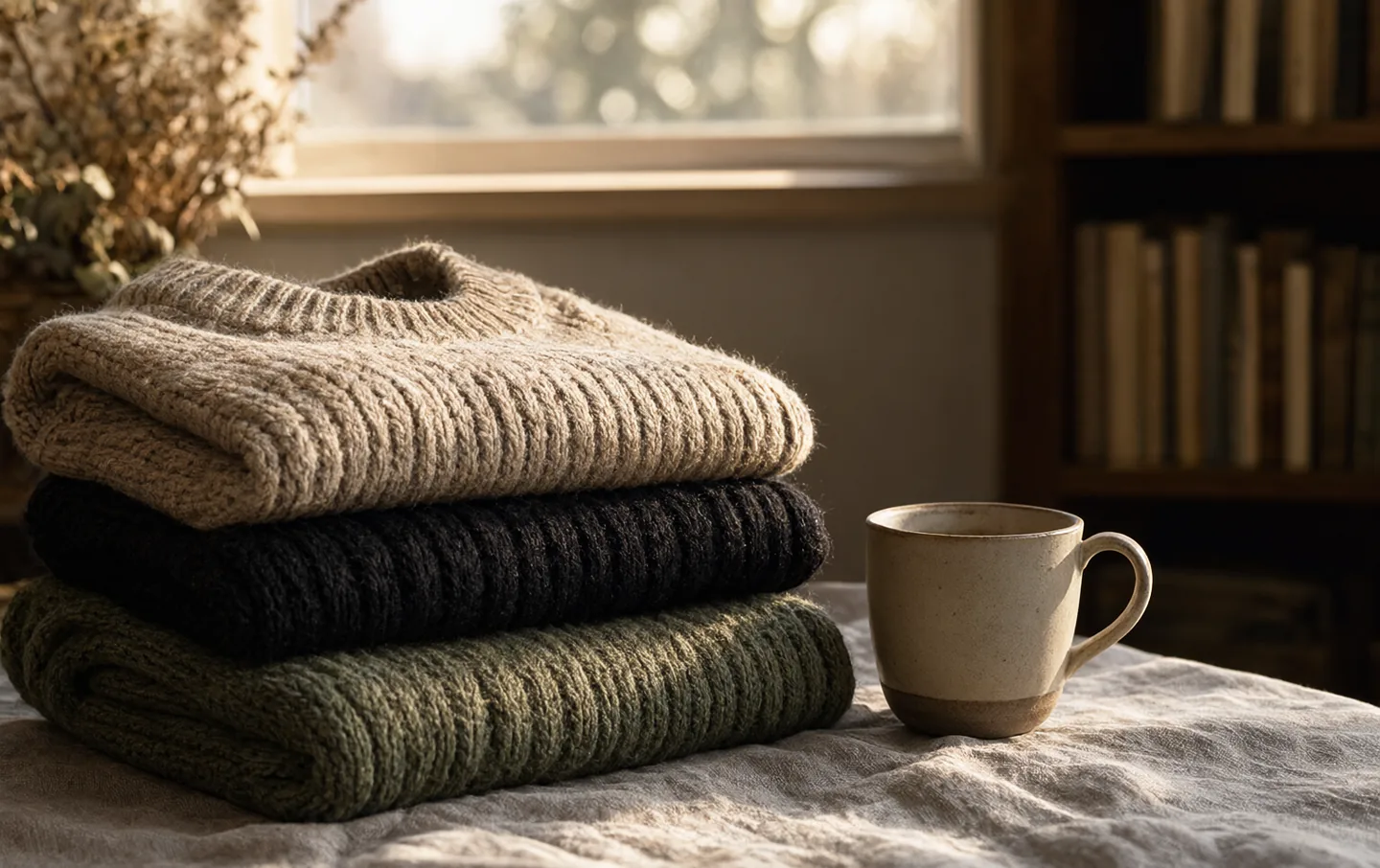
Merino has a reputation made of two half-truths: that it is soft, and that it itches. Both come down to the diameter of the fibre.
Fine merino, the kind worn against skin, is around 17 to 19.5 microns. Coarser wool can be 23 microns or more: a stiff fibre presses into your skin instead of bending, which is what itch is.
The short version#
Uniqlo's Merino Crew Neck is the cheapest way to find out whether you like merino. Quince is the step up in weight without a step up in price. Asket has the best cloth, Icebreaker is the durable outdoor option, and Naadam is the honest exception: cashmere, not merino.
Five knits, in order#
Uniqlo Merino Crew Neck Sweater
Best for a first merino layer
Uniqlo's merino crew is cheap access to something you might come to rely on. The wool is fine, the knit thin, and the sweater weighs almost nothing.
It is not a garment for a cold house. The pilling is the honest downside: friction at the cuffs and under a bag strap produces bobbles within a few months. A wool comb deals with them.
What works
- 100% wool at a price that makes mistakes cheap
- Fine enough to wear against skin
- Machine washable on a wool cycle
- Thin enough to layer under a jacket
What doesn't
- Pills at the cuffs within a season
- Too light for a cold room
- Colours and sizes sell out
Quince Merino Wool Half-Zip
Best for a heavier knit without the price
Quince makes one version of a thing and sells it cheaply. The merino half-zip is a thicker knit than the Uniqlo, with a collar that stands up and a zip that lets you dump heat.
The wool is soft, and the collar gives it shape. The fit is the weak point: the body is short and square, and the sleeves are wide, so it works over a shirt and looks awkward alone if you are tall.
What works
- Chunky, substantial knit for the money
- Soft enough for bare skin
- Half-zip makes layering easy
What doesn't
- Boxy and short in the body
- Stock and colours are inconsistent
- Finishing is a step behind the price
Asket The Merino Sweater
Best for one fine sweater that lasts
Asket's merino sweater feels like a garment rather than a layer. The yarn is fine and tightly knitted, the surface is smooth, and the shape is a straightforward crew with a ribbed hem that sits where it should.
Because the knit is fine, it layers under a jacket without bunching at the elbow. It also means it is not a winter sweater on its own. Think of it as the middle of a system: merino base, this, then a coat.
What works
- Fine, smooth merino with little prickle
- Published fibre origin and cost breakdown
- Clean, unfussy shape
- Holds shape between washes
What doesn't
- Thin; not warm on its own in winter
- Limited permanent collection
- Prices have crept up
Icebreaker Waypoint Crewe Sweater
Best for people who are hard on knitwear
Icebreaker has been making merino outdoor clothing for decades. The Waypoint's blend adds durability to the wool, which matters if you wear a sweater with a backpack or lean on desks.
It is warm for its weight, dries quickly, and does not need the careful handling of a fine-gauge knit. The trade is a drier, more technical hand and a look that reads outdoorsy. If your sweaters die at the elbows, this is the one that survives.
What works
- Merino blend that resists abrasion
- Warm without much weight
- Machine washable and quick to dry
- Holds colour after repeated washing
What doesn't
- More outdoor look than office look
- Blend feels less natural than pure wool
- Boxy through the body
Naadam The Original Cashmere Sweater
Best for warmth without weight
Including a cashmere sweater in a merino guide needs an explanation. Naadam makes its name on cashmere, and cashmere behaves differently: warmer for the weight, softer, and more prone to pilling because the fibres are shorter and finer.
It is light enough to layer, warm enough for a cool room, and more indulgent than the merino here.
What works
- Warmer than merino at the same weight
- Very soft against skin
- Simple crewneck shape
What doesn't
- Cashmere pills more than merino
- Needs gentler washing
- Fit varies between colours
Microns, gauge and the itch question#
Three numbers explain most of what you feel. Fibre diameter decides softness. Yarn count and ply decide how evenly the fibres lie. Knit gauge decides how tight the surface is: a 12-gauge knit is fine and smooth, a 5-gauge knit is chunky and airy.
If a sweater itches, the fibres are usually coarse enough to stand up from the surface, or the knit is loose enough to let fibre ends escape. A fine, tightly knitted 19-micron merino feels soft on most people. A loose 23-micron wool prickle almost everyone.
There is no universal threshold. Buy from somewhere with a return policy and trust your neck.
Washing and moths#
Wool does not need washing often. Air it overnight, spot-clean marks, and wash after several wears. Use cold water, a wool cycle and a pH-neutral detergent; regular detergent with enzymes damages the fibres. Turn it inside out, use a mesh bag, skip the spin, and dry it flat. Hanging a wet sweater stretches the shoulders.
Clothes moths eat keratin, which is what wool is. Wash sweaters before storing them. Cedar blocks and lavender may deter adults but do not kill larvae. For an infestation, freeze the garment in a sealed bag for several days, then store it sealed.
Questions people ask#
Why does my merino sweater pill?#
Short fibres work loose and tangle where something rubs: cuffs, underarms, bag straps. Finer yarns and looser knits pill more. Remove the bobbles with a wool comb.
Can I machine wash merino?#
Most modern merino can, on a cold wool cycle with a mesh bag and wool detergent. Never use a hot cycle or a tumble dryer, which will felt the wool.
Is merino warmer than cashmere?#
Cashmere is warmer for the same weight because the fibres are finer and trap more air. Merino is more durable, resists pilling better and is easier to wash. For a sweater you wear hard, merino wins.
A merino sweater should be something you reach for, not something you protect. Buy the finest knit you can afford, wash it gently, and it will outlast the trend that sold it to you.