Litter box smell is rarely a mystery. It is usually a box that is too small, too shallow, too rarely scooped, or sitting where the cat does not feel safe. A better box helps. Nothing replaces scooping.
Automatic boxes cut the daily work but add cleaning and consumables. We looked at size, depth, entry height, litter compatibility, and how each box behaves when a cat decides it is not interested.
The short version#
For most households, a big open box with high walls and a low entry, scooped daily, works better than a complicated one. The Tuft + Paw Cove is the one we would put in a living space. The Litter-Robot 4 is the automatic box worth owning if you will maintain it. The PetKit Pura Max 2 adds app data, the Frisco High Sided is the cheap workhorse, and the iPrimio stainless never holds a smell.
The short list#
Litter-Robot 4
Best for multi-cat homes and people who travel
The Litter-Robot 4 is the automatic box that most closely resembles a normal litter box in use. The globe is big, the opening is low, and the cycle is quiet. The app tells you when the drawer is full and roughly how often each cat visits.
Costs are real. Bags, filters, and repairs add up, and the unit needs a level floor and steady Wi-Fi. Cleaning the globe is hands-on. Kittens under three pounds fall below the weight minimum. If you will not keep up with the drawer, it becomes an expensive smell.
What works
- Large, open globe
- Quiet cycling
- Useful app and weight data
- Less daily scooping
What doesn't
- Expensive to buy and run
- Proprietary bags and parts
- Needs level floor and Wi-Fi
- Not suitable for very young kittens
Tuft + Paw Cove Litter Box
Best for open boxes in living spaces
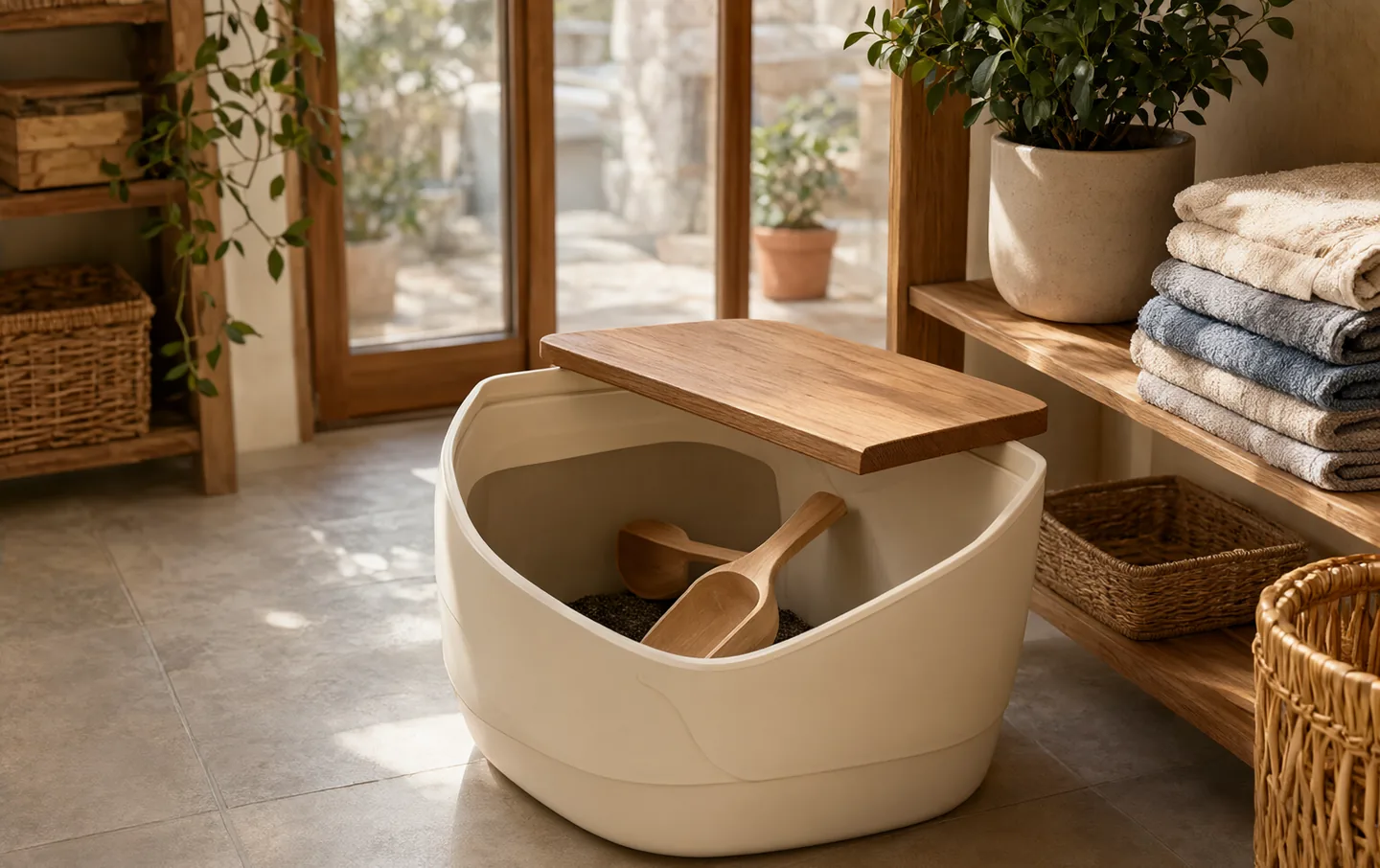
The Cove is an open box with delusions of furniture. It is wide enough for a big cat to turn around, the walls are high on three sides, and the front lip is low enough for an older cat. The scoop and dustpan sit in a recessed holder with a removable basket.
There is no lid, so it will not hide a smell or contain an enthusiastic digger. The price is high for something a cat will scratch. What you get is a box that is easy to scoop and pleasant enough to leave in the open.
What works
- Large open footprint
- High walls, low entry
- Integrated scoop and dustpan
- Wipes clean easily
What doesn't
- No lid or odor trap
- Expensive for plastic
- Litter scatter still possible
PetKit Pura Max 2
Best for people who like app reminders
The Pura Max 2 is the automatic box for someone who wants to know what is happening. The app logs visits and weight, the entry is lower than earlier models, and the waste drawer seals well.
It is still an enclosed machine. Some cats take to it immediately; others sniff and walk away. The drum needs periodic deep cleaning, the filter and desiccant are consumables, and the app is another account. If you like data, it satisfies. If you want to set it and forget it, the maintenance will surprise you.
What works
- Large 76-litre drum
- Low, wide entry
- App tracking and scheduling
- Sealed waste drawer
What doesn't
- Consumables and filters
- Drum cleaning is fiddly
- Needs 2.4GHz Wi-Fi
- Some cats dislike the enclosed drum
Frisco High Sided Extra Large Litter Box
Best for most cats and most budgets
The Frisco box is the least glamorous thing here and the one most cats will actually use. It is 24 inches long and 18 wide, with 10-inch walls and a low front entrance. That contains urine and kicked litter without making the box feel like a cave.
It will scratch and eventually hold a faint smell, which is true of most plastic boxes. There is no lid, and the entry is still a step for an arthritic cat. For the price, buy two. A second box solves more than a more expensive first box.
What works
- 24 by 18 inch footprint
- 10-inch walls contain mess
- Low 5.6-inch entrance
- Cheap enough to buy two
What doesn't
- Plastic scratches over time
- No lid
- Entry still high for some seniors
iPrimio Stainless Steel Cat XL Litter Box
Best for cats who spray high and owners who hate lingering odor
Stainless steel is what a litter box looks like when it is designed to be washed rather than replaced. It does not absorb urine into scratches, it does not stain, and a scoop moves cleanly. The XL pan is generous, and optional side panels add height for a cat who sprays.
The trade-offs are sensory. Claws on stainless make a sound some people cannot stand, and the pan is heavy when full. If smell lingers even after scooping, a stainless box is the cheapest way to rule out the box itself.
What works
- Stainless steel does not absorb odor
- Easy to scrape and wash
- Optional high sides
- Very durable
What doesn't
- Noisy when a cat digs
- Heavy to move
- Cool surface in winter
- Higher price than plastic
Size, depth, and the entry#
A box should be about one and a half times the cat's length, tail excluded. Most commercial boxes are smaller. If your cat is large or elderly, measure before you buy; a box that requires a jump may be avoided.
Two to three inches of litter gives a cat enough to dig and cover without turning the box into a beach. More litter means more weight and more waste. A low entry is not a luxury for an older cat; a high lip with no ramp is a common reason a senior starts going elsewhere.
Litter, scooping, and placement#
Use an unscented clumping litter unless your cat has shown a clear preference. Scented litter is for people, and some cats avoid it. Change the litter fully every couple of weeks, or sooner if the box smells after scooping. Wash with mild soap and water, not a harsh cleaner that leaves a scent.
Scoop at least once a day. Twice is better in a multi-cat house. Place the box somewhere quiet, away from food and water, and not next to a washing machine that starts mid-visit. Cats like an escape route, so avoid a corner with one way out. One box per cat, plus one, is the usual rule.
Automatic boxes and their real costs#
An automatic box is an appliance that handles waste. It does not eliminate cleaning, and it does not eliminate odor if the drawer sits for a week. Budget for bags, filters, and parts. Expect to take the drum apart more often than the marketing suggests.
The bigger risk is refusal. A cat who dislikes the noise, the enclosed space, or the movement will find somewhere else. Keep the old box available during the transition. For kittens, seniors, or cats with mobility issues, a simple low box is usually the safer choice.
Cats who refuse covered boxes#
Some cats will use a covered box. Many will not. If a cat is going beside the box rather than in it, remove the lid before you buy anything else. An open box in the same spot is the cheapest test you have.
Do not punish a cat for missing the box. It makes the box more frightening and teaches nothing. Clean the spot with an enzymatic cleaner and give the cat a quiet route back.
Questions people actually ask#
How often should I scoop?#
Once a day at minimum, twice with more than one cat. A box scooped daily needs a full change less often and smells far less.
Why does my cat go right next to the box?#
The box may be too small, too deep, too covered, or in a spot the cat does not feel safe. It can also be a medical issue. Try a larger open box, and if nothing changes, call your vet.
Is an automatic litter box worth it?#
Only if you will clean it. The machine handles scooping, not deep cleaning, and the consumables cost money. If you travel often and will keep up with maintenance, it can be worth it. If not, a large box and a good scoop are cheaper and more reliable.
The best setup is one your cat uses without hesitation and you can clean in under a minute. Start with size and access.