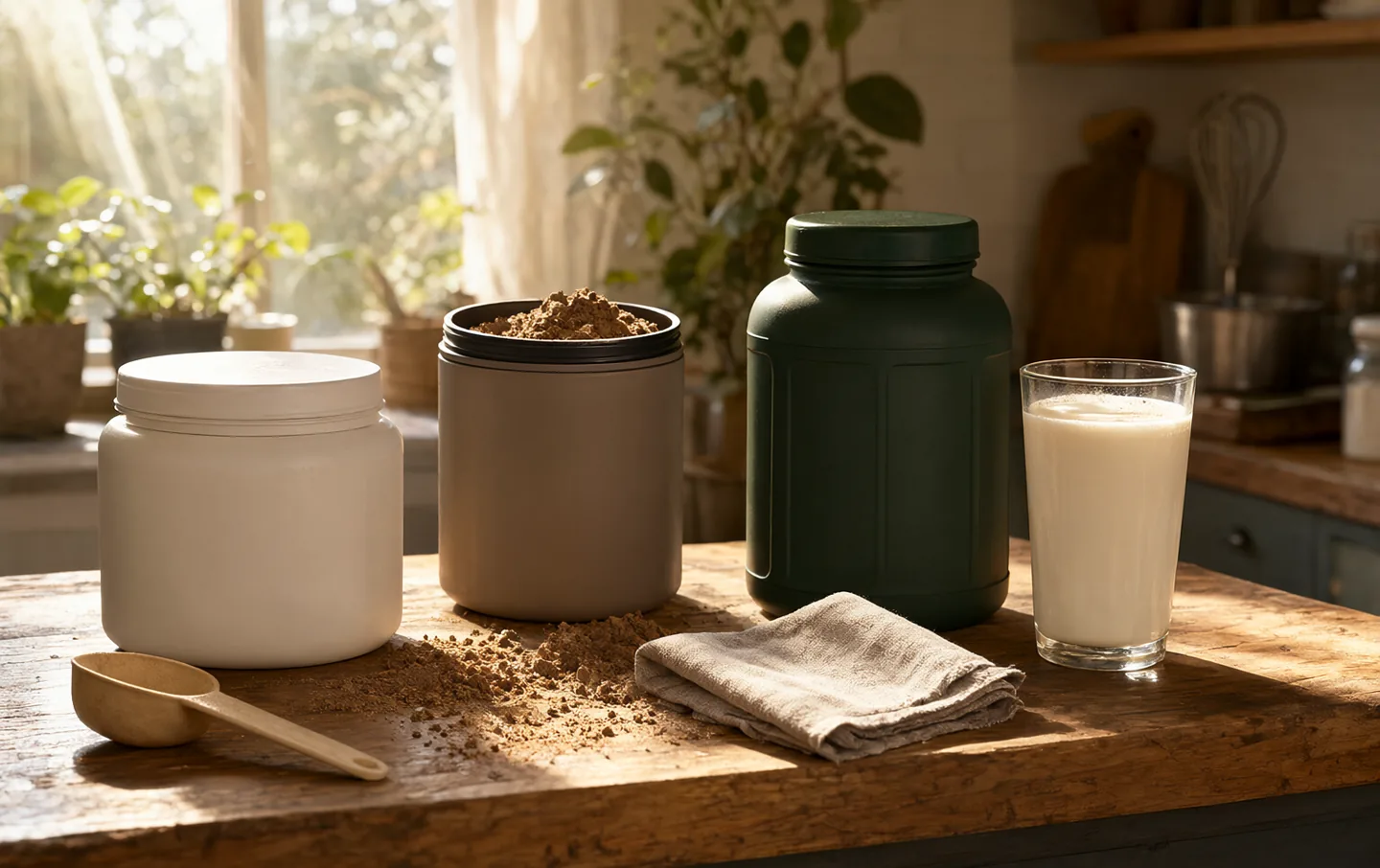
Most people get enough protein from food. The reason to buy powder is convenience: a fast breakfast, a post-training option, or extra protein when appetite is low. That makes taste and texture part of the purchase, not an afterthought.
The category is crowded with confectionery flavors and labels that look like a nutrition textbook. The useful questions are simpler: how much protein per serving, how much per calorie, what else is in the scoop, and who tested it.
A tub is a commitment. Buy a small size first if you can.
The short version#
Ritual Essential Protein is the plant-based pick with heavy-metal testing. Momentous Whey Isolate is the certified whey for athletes. Naked Whey is the one-ingredient option. Optimum Nutrition Gold Standard is the value tub. Ascent Native Whey is for people avoiding artificial sweeteners.
The short list#
Ritual Essential Protein
Best for a vegan powder with a testing story
Ritual's protein is a pea-based powder with 20 g of protein, 115 calories, and 3 g of carbs per serving. It adds methionine to round out the amino acid profile, and it is certified by the Clean Label Project, which tests for heavy metals and other contaminants. The flavor is vanilla, and there is only one.
The scoop is smaller than the whey tubs, so 20 g is a modest serving. The bag closure is awkward, and the price is high. It is not sport-certified, so drug-tested athletes should look elsewhere.
Buy it if you want a plant protein with a serious testing story. Do not buy it if you want 25–30 g per scoop or flavor choices.
What works
- 20 g protein per serving
- Clean Label Project certified
- Heavy-metal tested
- Organic pea protein
What doesn't
- Modest serving size
- Expensive
- One flavor
- Awkward bag closure
Momentous Whey Protein Isolate
Best for athletes who need a tested isolate
Momentous whey isolate is NSF Certified for Sport, grass-fed, and mixes cleanly. A serving is around 25 g of protein with a short ingredient list. It is the one we would point an athlete to if they need a certified product.
It is expensive, and the flavor options are limited. Whey isolate is not suitable for anyone avoiding dairy, and the sweetener is noticeable if you are used to unflavored powder.
Buy it if certification matters and you want a lean isolate. Do not buy it if you are on a tight budget.
What works
- NSF Certified for Sport
- Grass-fed whey isolate
- Around 25 g protein
- Mixes cleanly
What doesn't
- Expensive
- Limited flavors
- Contains dairy
- Sweetened
Naked Whey
Best for adding protein without flavor
Naked Whey is grass-fed whey with 25 g of protein per serving and almost nothing else. The unflavored version is the one to try if you want to add protein to food without a flavor. It is third-party tested for heavy metals.
Unflavored whey tastes like milk powder, because that is what it is. It is thicker than a flavored isolate and does not dissolve as easily in cold water. There is no sport certification.
Buy it if you want a short ingredient list and will use it in smoothies or oats. Do not buy it if you need a sweet, easy-to-shake drink.
What works
- 25 g protein per serving
- Grass-fed whey
- Minimal ingredients
- Tested for heavy metals
What doesn't
- Plain taste
- Thick texture
- No sport certification
- Bag packaging
Optimum Nutrition Gold Standard 100% Whey
Best for a cheap, easy-to-find everyday scoop
Gold Standard is the tub you see in every gym. It delivers 24 g of protein, 5.5 g of BCAAs, and about 120 calories per serving, with 1 g of sugar. It is a whey blend, not an isolate, and it carries Informed Choice certification.
It uses artificial flavors and sweeteners, and the tub is enormous. The blend includes whey concentrate, so there is more lactose than an isolate. It is not the cleanest label, but it is consistent and easy to find.
Buy it if you want a cheap, familiar tub that mixes well. Do not buy it if you avoid artificial sweeteners or dairy.
What works
- 24 g protein per serving
- Informed Choice certified
- Low cost per serving
- Mixes easily
What doesn't
- Artificial sweeteners
- Whey blend with lactose
- Very large tub
- Not dairy-free
Ascent Native Whey Protein
Best for whey without sucralose
Ascent uses native whey, filtered directly from milk rather than from cheese production, and it carries Informed Sport. It has 25 g of protein and no artificial sweeteners, using monk fruit and stevia instead.
Native whey is a nice story, but it does not automatically make a better powder. The price is high, the texture is thin, and the flavor is mild. If you are sensitive to sucralose, it is a good alternative.
Buy it if you want a certified whey without artificial sweeteners. Do not buy it if you want the cheapest protein per gram.
What works
- Informed Sport certified
- 25 g protein per serving
- No artificial sweeteners
- Native whey
What doesn't
- Expensive
- Thin texture
- Mild flavor
- Limited sizes
Read the scoop, not the front#
Protein per serving is not protein per calorie. A 20 g scoop with 115 calories is a different product from a 25 g scoop with 120 calories. If you want protein without a lot of energy, compare the ratio, not the big number.
Isolate, concentrate, and blend are different trade-offs. Isolate is filtered to remove more lactose and fat, and it costs more. Concentrate is cheaper and has more lactose. A blend is a mix of the two. If dairy gives you trouble, isolate is the safer place to start.
Plant powders need a blend or a boost. Pea protein is low in methionine; rice protein is low in lysine. A pea-rice blend or an added amino acid can make the profile complete. A single plant source at a low dose is not automatically equivalent to whey.
Watch for amino spiking. Some labels add glycine or taurine, cheap amino acids, to inflate the protein number. That is legal but can make the claim look better than the protein you are getting. Look for a recognizable protein source and a complete amino profile.
Sweeteners are a preference, not a safety ranking. Sucralose, stevia, and monk fruit are all used widely. "No artificial sweeteners" is useful if you care, but it does not make a powder more nutritious.
Testing matters more in plant powders. Cocoa, rice, and some pea proteins can carry heavy metals. Clean Label Project certification, NSF Certified for Sport, and Informed Sport are useful signals, but they check different things. GMP is a manufacturing standard, not a contaminant test. Rules vary by country, and 'natural' does not mean risk-free.
Questions people actually ask#
Is whey better than plant protein?#
Both can support muscle protein synthesis if the dose and amino acid profile are adequate. Whey has more leucine per gram and is digested quickly; plant blends can match it with a larger dose. Choose based on your diet and digestion, not the marketing.
How much protein do I need?#
Guidelines vary with body weight, age, and activity, and individual needs are a conversation with a clinician or dietitian. A powder is a tool, not a target.
Does protein powder expire?#
Yes. The texture and flavor fade, and the vitamins added to some blends degrade. Follow the date on the tub and store it dry. A clumped powder is a sign that moisture got in.
The best protein powder is the one you will actually drink. Start with the protein number, then the ingredient list, then the seal. The flavor comes last, but it is the reason most tubs end up unfinished.