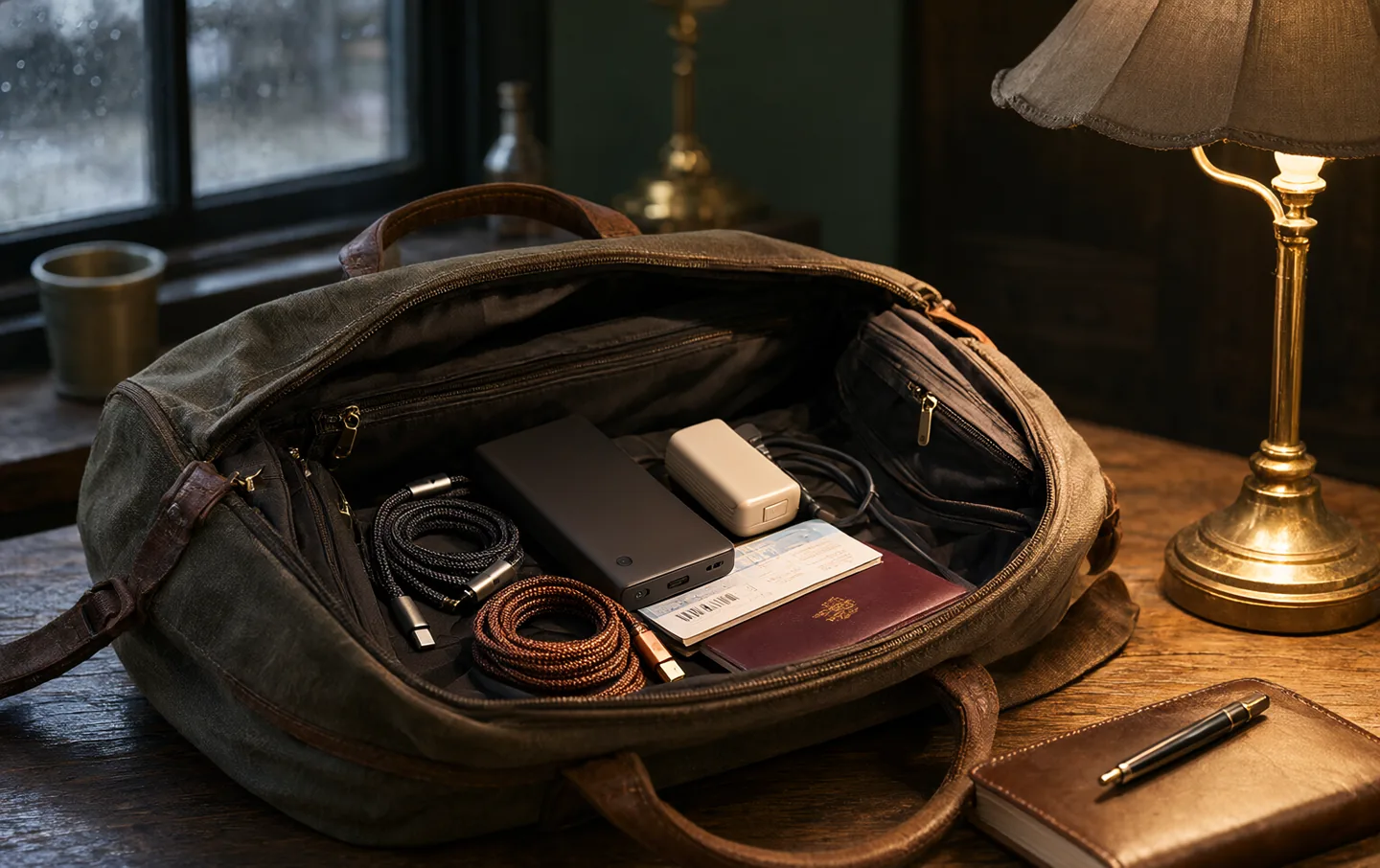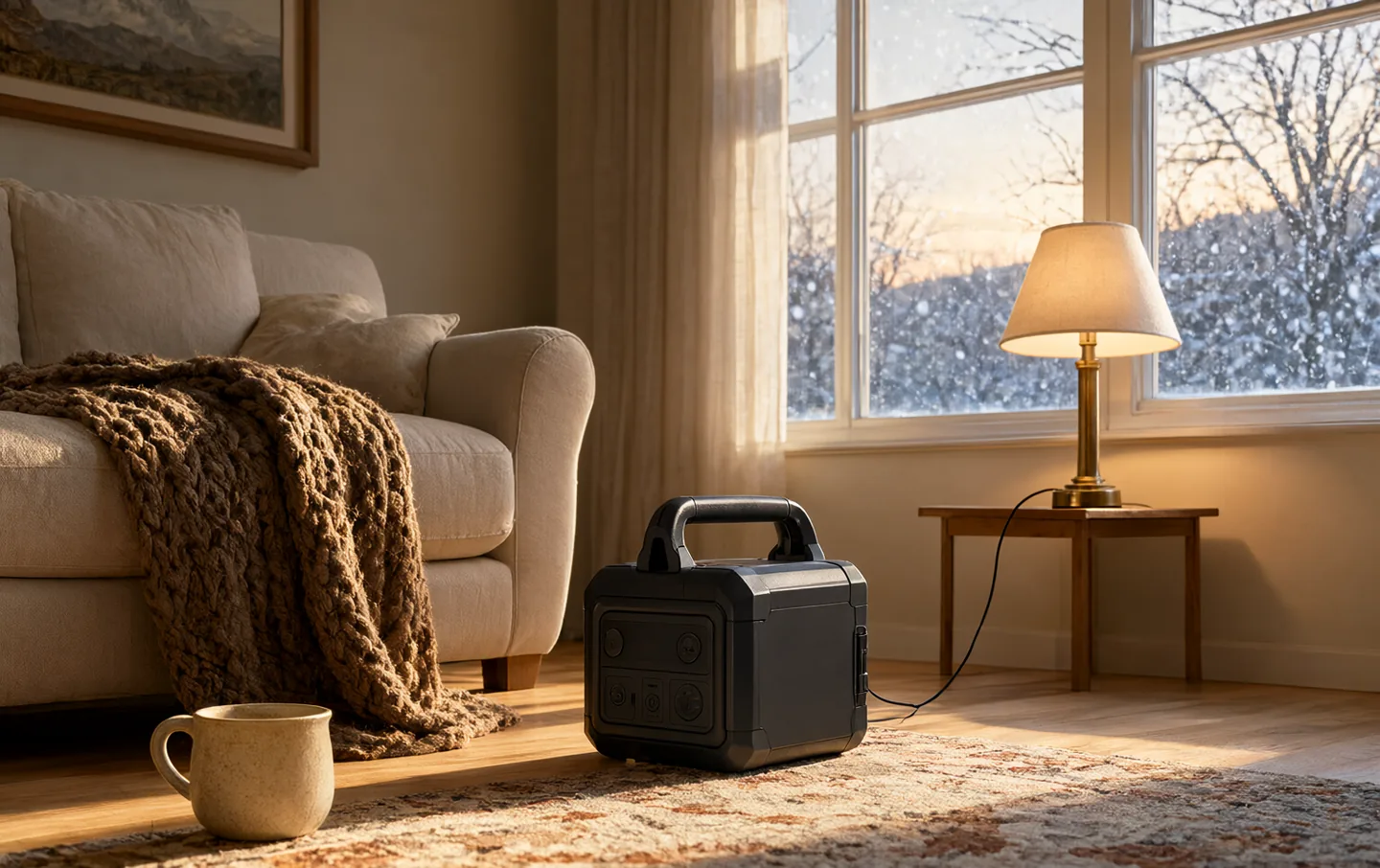
Jackery sells a confusing number of boxes that look like a cooler with a handle. The useful differences are capacity, output, weight, and price. In Canada, winter adds another variable: the cold quietly takes a cut of all four.
An outage in a Toronto apartment is not the same emergency as a furnace failure in rural Ontario. A camper with a CPAP machine needs something different from a homeowner with a sump pump. This guide matches the box to the job.
We compared published specifications, independent runtime tests, and recent Canadian pricing. We have not run a multi-day outage on all three, so treat runtime estimates as calculations rather than promises.
The short version#
The Explorer 1000 v2 is the one to carry. The Explorer 2000 v2 is the one most houses should buy. The HomePower 3000 is for a fridge, a sump pump, or a furnace blower when the power stays off longer.
Skip the Explorer 1500 v2 unless it is hundreds of dollars cheaper than the 2000 v2. The Explorer 3000 Pro has been discontinued, so do not pay a premium for old stock.
Watts, watt-hours, and the number that matters#
Watt-hours are the size of the tank. Watts are the width of the pipe. A 1,500W station with 1,070Wh can run a 1,500W kettle for a little over half an hour in perfect conditions, and less once inverter losses and cold are counted. The same battery will run a 50W router for many hours.
Add up the things you need running at the same time, not everything in the house. A fridge compressor often draws 100–200W while running, with a brief startup spike several times higher. A furnace blower is commonly 300–700W. A space heater is 1,500W and will empty a 2kWh station in about an hour. That is why the surge rating matters: a 2,200W station with 4,400W of surge can start a fridge that a 1,000W unit would trip on.
The short list#
Jackery Explorer 1000 v2
Best for a small apartment, a car trunk, and a short outage
At recent Canadian promotions it has been around CAD $649 against a list price near $1,099. That is less than many 500Wh stations from brands with less support, which makes the 1000 v2 the easiest recommendation on the shelf.
It runs what an apartment loses first: router, modem, laptop, phone, a lamp, a CPAP machine. Independent tests have run it for nearly two hours at a steady 475W load, a more useful number than the marketing runtime for a 10W light. A fridge will start and run for a few hours, but not a day. A 1,500W space heater will drain it in well under an hour.
The 10.8kg weight is the reason to choose it over the 2000 v2. It fits in a closet, goes up stairs, and comes to the campsite. This is a personal outage battery, not a house backup.
What works
- 1,070Wh and 1,500W continuous, with 3,000W surge
- 10.8kg, so one person can move it
- Three AC outlets, two USB-C, one USB-A, and 12V DC
- LiFePO4 cells and a 3+2 year warranty
What doesn't
- Not enough for electric heat or a long fridge outage
- The fan is loud in emergency charge mode
- At list price it sits close to bigger models
Jackery Explorer 2000 v2
Best for a fridge, router, lights, and a furnace blower for a day
At recent promotions around CAD $1,099 against a $2,499 list, this is the value in the range. The battery is 2,042Wh, the inverter holds 2,200W continuously with 4,400W of surge, and the whole unit weighs 17.9kg. That surge rating is the difference between a fridge that starts and one that trips the station.
The feature worth paying for is the UPS mode. Plug the router and desktop into it and it switches over in about 20ms, fast enough that most equipment does not reboot. That makes it useful before an outage, not only after one.
Two kilowatt-hours is roughly a day of essentials if you are careful: a fridge cycling on and off, lights, router, laptop, and a fan. Add a furnace blower and the maths gets tighter. For a house that loses power for eight to twenty-four hours, it is the sweet spot.
What works
- 2,042Wh and 2,200W continuous, with 4,400W surge
- UPS switches over in about 20ms
- 39.5 lb, which is heavy but still a two-hand lift
- Silent charging mode is rated under 30dB
What doesn't
- It will not run an electric range or central air
- Solar recharge is slow and weather-dependent
- The 2000 v2 Extreme Kit costs more for cold-weather use
Jackery HomePower 3000
Best for a longer outage in a house with a fridge, sump pump, or furnace
The HomePower 3000 is the one that stops feeling like camping gear. It has 3,072Wh, 3,600W continuous, a 7,200W surge, and four AC outlets including a TT-30 for a trailer. A realistic estimate for a fridge, lights, router, and fan is about 15 hours; a real outage will vary with the fridge and how often the heat runs.
The point is headroom. A sump pump or a furnace blower that would trouble a smaller station can start here. It charges from a wall outlet in about 2.2 hours, or faster with AC and DC combined.
It weighs around 27kg: movable on a smooth floor, awkward on stairs, the honest trade for three kilowatt-hours. It can be connected to a manual transfer switch, but that is an electrician's job and not included. A furnace is usually hardwired; do not treat an extension cord as permanent wiring. Without a transfer switch, you are choosing a few circuits and running cords.
At the current promotion it costs close to the 2000 v2, which makes the decision strange. Buy it if you have a sump pump, a furnace, or a fridge you cannot empty. In an apartment, it is more battery than you can usefully move.
What works
- 3,072Wh and 3,600W continuous, with 7,200W surge
- Four AC outlets, including a TT-30 for an RV
- UPS mode and 1.7-hour hybrid charging
- About 27kg, with a handle and a reasonable footprint
What doesn't
- Sixty pounds is not a carry-upstairs appliance
- A transfer switch is extra and needs an electrician
- 120V only, so no dryer, range, or central air
What to skip, and why#
The Explorer 1500 v2. It offers 1,536Wh and 2,000W for around CAD $1,049. Jackery's own page points shoppers to the 2000 v2, which has a third more capacity for about fifty dollars more. At 14.5kg, the 1500 is not meaningfully lighter either. On a deep clearance it makes sense; at normal pricing it does not.
The Explorer 3000 Pro. Discontinued. Old stock can surface at optimistic prices; the HomePower 3000 is the replacement.
The biggest solar bundle. A 200W panel in a Canadian December is not a 200W panel. Short days, low sun, and snow can cut output to a fraction of the rating. Bundles make sense for a cabin where you will deploy the panels; for a city outage, charge from the wall and put the panel money toward a transfer switch.
The Canadian winter problem#
LiFePO4 is more forgiving in the cold than older lithium chemistries, but it is not immune. Expect less usable capacity below freezing, and follow the charging temperature range in the manual. Many units refuse to charge below 0°C as a protection, not because they are broken. Let a cold station warm to room temperature before plugging it in.
Do not store it in an unheated garage at 0% and expect it to be ready in February. Keep it indoors at roughly 50–80% and top it up every few months. The Explorer 2000 v2 Extreme Kit adds a bag that Jackery rates for -40°F, useful for a job site or an unheated cabin. It is not a reason to leave the station outside all winter.
What a power station will not do#
It will not power a whole house without a transfer switch and an electrician. It will not run electric resistance heat for long, keep central air going, or replace a generator in a multi-day rural outage. Never backfeed a dryer outlet or a panel with a cord. A battery is quieter than a gas generator but still needs airflow.
If someone depends on powered medical equipment, plan for two nights, test the setup before an outage, and keep a second smaller battery charged. A power station is a bridge, not a utility.
Questions people actually ask#
Can a Jackery run a fridge?#
Usually, if the startup surge is within the station's surge rating and you run the fridge on its own. The 1000 v2 can start a small fridge but will not carry it for a day; the 2000 v2 and HomePower 3000 are the realistic choices. Keep the door closed and check the temperature with a thermometer.
Do I need the solar panel?#
Only if you will be off-grid for several days. In a city outage, wall charging before the storm is faster and more reliable. A 200W panel takes hours to replace a meaningful charge in good summer sun, and in a Canadian winter it may not keep up with a fridge at all.
Can I leave it plugged in?#
UPS mode is designed to sit between the wall and your equipment, so that use is fine. For long-term storage, Jackery and most manufacturers suggest a partial charge in a cool, dry place.
The right Jackery is the smallest one that covers the loads you actually have. For most apartments, that is the 1000 v2. For most houses, the 2000 v2. For a house with a sump pump and a furnace, the HomePower 3000. Canadian prices move constantly, so the current listing is the only price worth trusting.