The best running earbud is the one you stop touching. Not the one with the biggest driver or the longest feature list. If you spend the first mile pushing a bud back into your ear, the sound quality is irrelevant.
Fit is personal in a way that reviews cannot settle. Ear shape, sweat, glasses, hats, and how much your jaw moves all change the answer. What we can do is separate the designs that stay put for most people, explain what each one gives up, and point out the features that matter when your hands are wet.
The quick version#
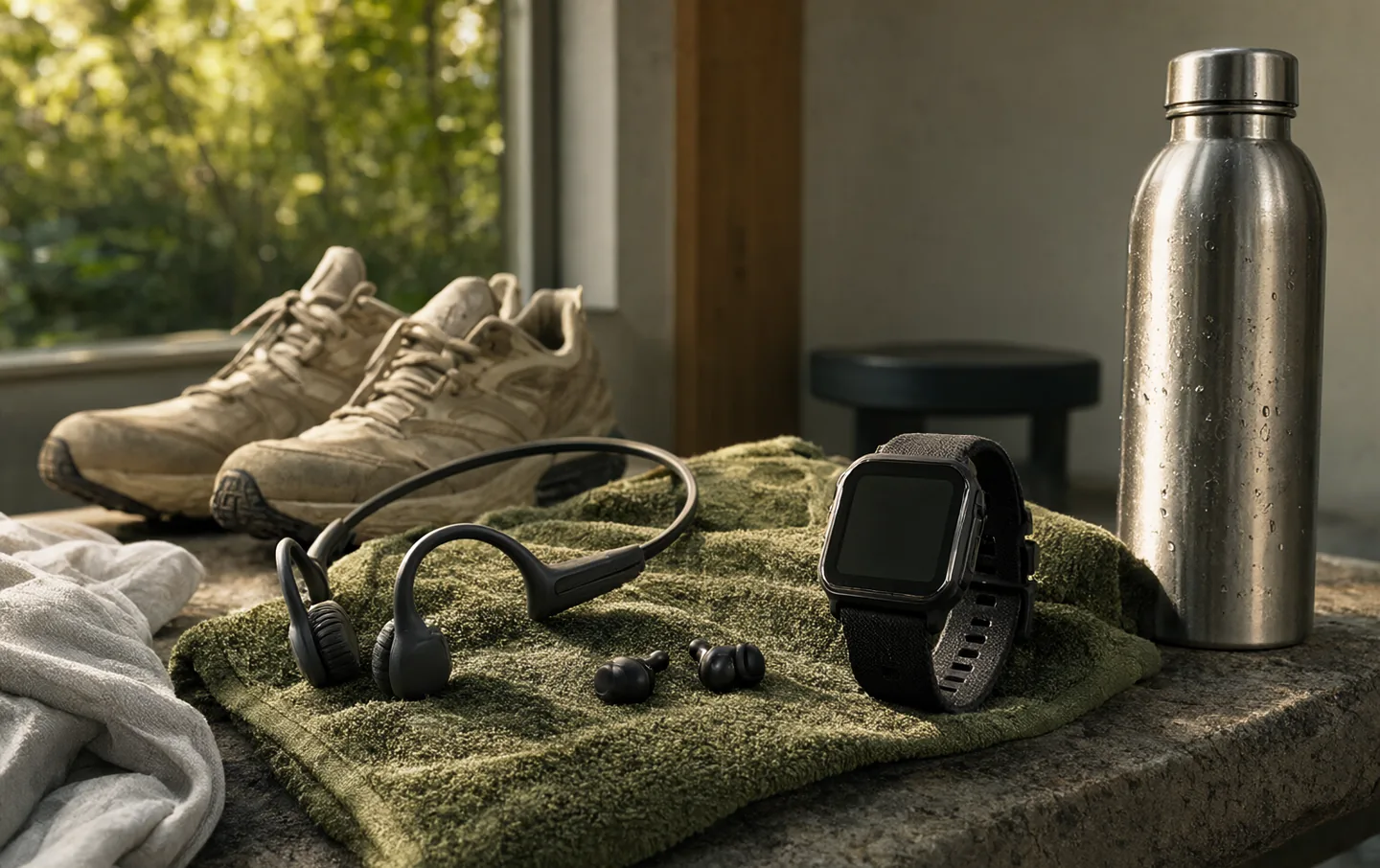
The Shokz OpenRun Pro 2 is the safest choice for road runners because it leaves your ears open. The Jabra Elite 8 Active Gen 2 is the tough in-ear pair for sweat and rain. The Beats Powerbeats Pro 2 has the most reliable hook and the most bass. And the AirPods Pro 3 is the one pair that can run, commute, and take calls without feeling like a compromise.
The short list#
Shokz OpenRun Pro 2
Best for road runners, cyclists, and anyone who hates things in their ears
The OpenRun Pro 2 sits on your cheekbones and fires sound toward your ears, with a small air driver adding the low end that bone conduction alone cannot manage. The result is not audiophile sound. It is clear speech, enough rhythm to run to, and a full stereo picture of the traffic around you.
The neckband is the compromise. It stays in place during a hard run and does not need to be reseated, but it is one more thing to hang on a hook, and it can rub against a high collar. The buttons are easy to find by feel, which matters more than touch controls when your fingers are wet.
If you run on roads, this is the pair we would start with. If you run on a treadmill in a noisy gym, the lack of isolation works against it.
What works
- Leaves the ear canal completely open
- Stays put without a hook or wing
- Physical buttons work with wet hands
- Twelve hours of battery
What doesn't
- No noise cancelling at all
- Bass is present but not deep
- Neckband can clash with collars and hats
- Sound leaks at high volume
Jabra Elite 8 Active Gen 2
Best for sweaty sessions, rain, and gym bags
Jabra's sport earbuds are built for the kind of sweat that soaks a shirt. The rubberized coating and IP68 rating mean rain, splashes, and a rinse under the tap are not emergencies. The buds twist into the ear and hold on without a hook, which some people find more comfortable than a band.
The sound is energetic and the noise cancelling is good enough for a gym. That is also the problem outdoors: the seal that keeps the noise out keeps the traffic out too. Use the transparency mode on the street, and accept that it is not as natural as the best in-ear systems.
The case is larger than the earbuds suggest, and the fit is only as good as the tip you choose. Try all three sizes before a long run, not after.
What works
- IP68 rating on the buds
- Secure fit without an ear hook
- Adaptive noise cancelling
- Eight hours with ANC, plus a case
What doesn't
- In-ear design blocks traffic noise
- Case is bulkier than it needs to be
- Fit depends heavily on tip size
- Companion app is required for tuning
Beats Powerbeats Pro 2
Best for hard runs, gym sessions, and bass-forward listeners
The Powerbeats Pro 2 uses the oldest and still most trustworthy idea in running headphones: a hook that goes over the top of the ear. It is not elegant, but it does not care about the shape of your ear canal, and it stays put when you sprint or shake your head at a crossing.
The sound is the most fun here, with real bass and a lively top end. The heart-rate sensor is a useful addition if you already run with a phone and want one less strap. Battery life is long, and the case holds several extra charges.
The compromises are physical. The case is big enough to notice in a running belt, the buds are only rated IPX4, and the fit relies on the hook rather than a deep seal. For heavy sweat, the Jabra is the tougher choice.
What works
- Ear hooks stay put during sprints
- Punchy, full sound
- Heart-rate sensors in each bud
- Physical controls and Apple integration
What doesn't
- Large charging case
- Only IPX4 sweat resistance
- No wireless charging
- Android features are limited
Apple AirPods Pro 3
Best for iPhone owners who want one pair for everything
The AirPods Pro 3 are not running headphones in the specialist sense. They are everyday earbuds that happen to be good enough to run in. The transparency mode is the most natural of any in-ear pair here, which makes a pavement run less isolating than the seal suggests.
The IP57 rating is a real improvement for sweaty ears, and the heart-rate sensor covers the basic fitness case. Noise cancelling is excellent on a train and useful on a treadmill. The case is small enough for a pocket, which cannot be said for the Beats.
The catch is the seal. Some people love it; others get pressure, itch, or a blocked feeling after an hour. The foam tips also age faster than silicone. If you run on busy roads, use transparency and keep the volume low.
What works
- Excellent noise cancelling and transparency
- IP57 rating handles sweat and rain
- Heart-rate sensing during workouts
- Small case and strong iPhone integration
What doesn't
- In-ear seal blocks traffic noise
- Foam tips wear out
- Best features are Apple-only
- No hook for very intense sessions
Open-ear versus in-ear#
Open-ear designs, whether bone conduction or air conduction, leave the ear canal clear. You hear cars, cyclists, and someone calling your name. The cost is bass, isolation, and sometimes volume: in a noisy place, you may turn them up until they leak.
In-ear designs seal the canal. They deliver more bass, better noise cancelling, and a more stable fit for many people. The cost is awareness. On a road with no pavement, that trade can be dangerous.
The middle ground is an in-ear bud with a good transparency mode. It is not as open as a bone-conduction band, but it is more natural than a sealed bud with the music off.
What to check before you buy#
Fit is a trial, not a spec. Wear the buds for twenty minutes at home, shake your head, open your mouth wide, and run up a flight of stairs. A bud that feels fine sitting still can work loose once you sweat.
Sweat is harder on electronics than rain. IPX4 covers splashes; IP68 covers dust and longer immersion. Neither rating covers steam, chlorine, or salt water. Rinse with fresh water after a sweaty session and let them dry before charging.
Controls matter more when you are moving. Physical buttons are easier to find than touch panels, especially with wet hands. Check whether the controls can change volume, not just play and pause.
Battery life is a range, not a promise. Noise cancelling, high volume, and cold weather all reduce it. If you run long distances, look for at least six hours with the features you actually use.
Questions people actually ask#
Are bone-conduction headphones safer?#
They let you hear traffic, which is a real advantage on roads. They are not automatically safer: if you turn them up loud enough to drown out the street, you have given up the benefit. Keep the volume low enough that you can hear a car behind you.
Can I swim in running earbuds?#
Most cannot. IPX8 is not the same as pool-proof, and chlorine is hard on seals. Shokz makes a separate swimming model with onboard storage, and it is the better tool for laps. The earbuds here are for sweat and rain, not lengths.
Why do my earbuds keep falling out?#
Usually the tip size, the shape of your ear, or jaw movement. Try the next size up, then a foam tip, then a hook.
The right pair is the one you forget about halfway through the run. Choose the design that matches where you run, then fit it properly. Everything else is a preference.