Most jewelry is bought for an occasion. A gold chain is bought for a Tuesday. It sits at the base of the throat and becomes part of how you look before you decide what to wear.
That is also why so many chains disappoint. The clasp rotates to the front. Plating dulls at the nape of the neck. A $150 piece starts to look like something from a costume drawer. The difference is rarely the design. It is the metal, the gauge, and the closure.
The short version#
The Missoma Mariner Chain is the best balance of presence and price for most people. The Mejuri Mini Anchor Chain is the one to buy if you want solid gold and never want to think about it again. Catbird's Fine Chain is the layering chain, and the Gorjana Parker is the one to take to the beach.
What the label actually means#
Solid gold means the whole piece is gold alloy, usually 14k or 18k. Fourteen karat is 58.3 percent gold and harder than 18k, which is why it suits daily wear. You are paying for metal by weight, so a solid chain has a floor value.
Gold vermeil is sterling silver with a thick gold layer, legally at least 2.5 microns in the United States. Good vermeil can last years, but it is still a coating. The clasp and anywhere a pendant rubs will show a warm silver tone first.
Gold-plated jewelry is a thin gold layer over brass, copper, or steel, often well under one micron. It looks convincing on day one and tired within a season if you wear it in the shower or under perfume. There is nothing dishonest about that at $60. There is something dishonest about it at $200.
Gold-filled is a thicker gold layer bonded to base metal. It wears better than plating, but it is not solid gold and should not be priced like it.
Three chains worth knowing#
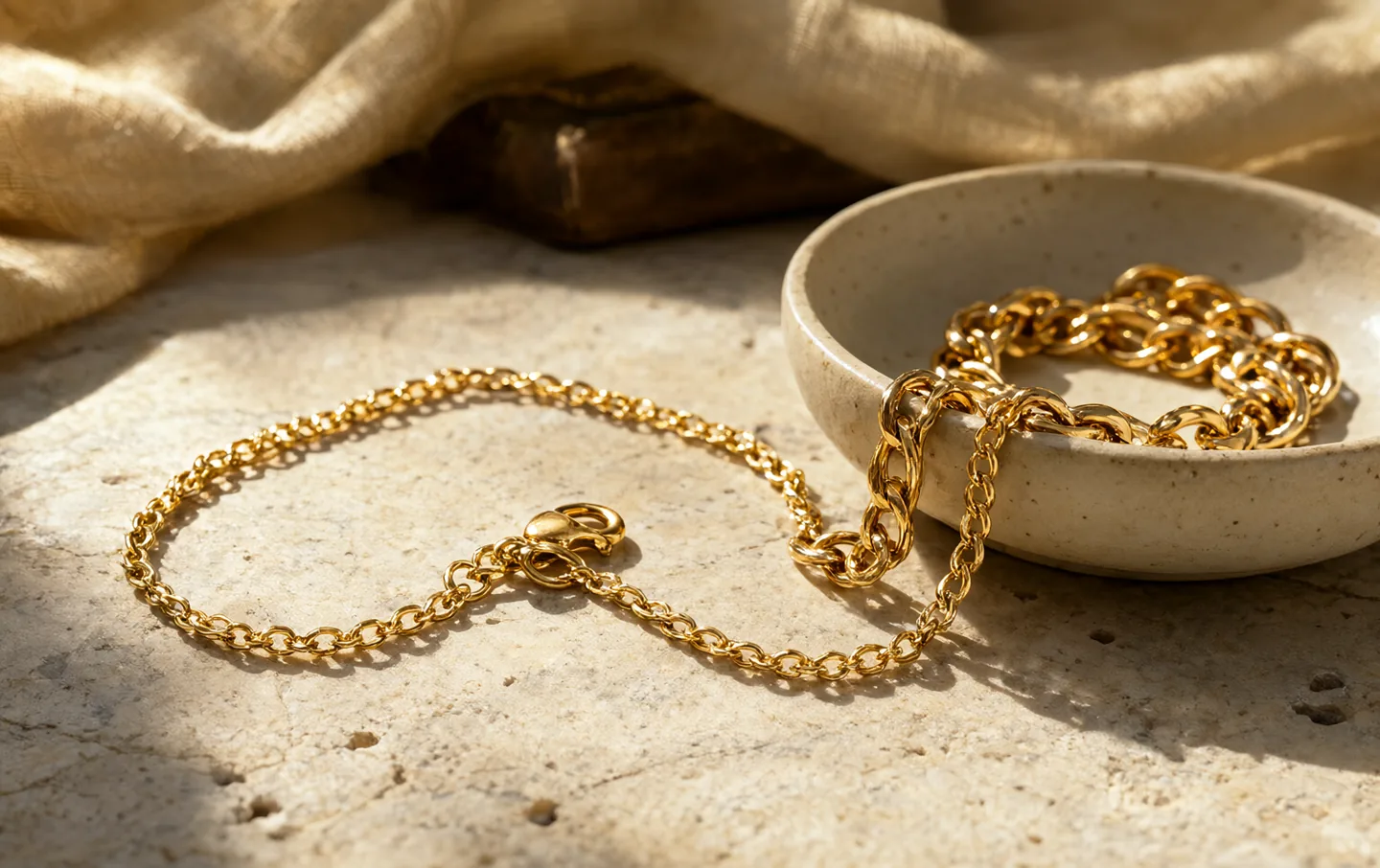
A cable chain is oval links, each turned ninety degrees from the last. It is strong, easy to repair, and reads as a line rather than a statement. A curb chain has flattened interlocking links that lie against the skin and catch light in a rolling way; it looks more expensive than a cable at the same weight. A rope chain twists two strands together, giving density without a pendant, but it can kink and snag knitwear.
Gauge matters more than the name. A 1mm chain disappears on most necks; 2mm reads as jewelry across a room. A hollow link can be 4mm wide and weigh almost nothing, which feels like a bargain until it dents.
The clasp is where chains fail#
A lobster clasp is the most secure everyday closure. A spring ring is lighter and the most likely to deform. A box clasp or toggle looks elegant and can open on a scarf. Check that the jump rings are soldered closed; an unsoldered ring is a chain waiting to be lost.
The short list#
Missoma Mariner Chain Necklace
Best for a first real chain that looks heavier than it is
Missoma's mariner chain is the piece that built the brand's reputation, and the links explain why. They are flat and slightly irregular, so the chain sits between a curb and a paperclip, wide enough to be visible under a shirt collar. It is gold vermeil over recycled sterling silver.
The adjustable closure means it works high with a crew tee or low over a knit, with or without a pendant. The gold is a coating, so put it on after perfume and take it off before a chlorine pool.
What works
- Substantial links without much weight
- Adjustable length suits high and low necklines
- Layers well with finer pieces
- Warm gold tone that flatters most skin
What doesn't
- Vermeil, not solid gold
- The clasp area will wear first
- Needs a wipe after perfume and sweat
Mejuri Mini Anchor Chain
Best for one chain, worn continuously, for a decade
This is the chain for someone who does not want a drawer of options. It is solid 14k, with a small anchor link that gives it more texture than a cable. It disappears under a shirt and does not need to come off at night.
The compromise is scale. "Mini" is accurate, and fine chains can kink if you pull a sweater over them carelessly. It is also a lot of money for a small amount of gold. What you are buying is the end of the decision, plus the ability to have the chain polished rather than replaced.
What works
- Solid 14k gold throughout
- Secure lobster clasp
- Quiet enough for work, bright enough alone
- Repairable by any competent jeweler
What doesn't
- Expensive for a fine chain
- Delicate gauge is not for rough handling
- Few length options
Catbird Fine Chain Necklace
Best for a base layer that stays out of the way
Catbird has built a following on chains that look like they were always there. This is a true fine chain: a narrow cable that sits close to the skin and makes a pendant look considered rather than heavy. It is 14k gold, made in the brand's Brooklyn studio, with the slight softness of something assembled by hand.
Buy it for the top layer of a stack, not as a single statement. It is not the chain for a heavy pendant, but it never competes with the rest of your jewelry. Catbird's return window is short and custom pieces are final, so check the length against a chain you own.
What works
- Nearly invisible at the neckline
- 14k gold, not vermeil
- Works as a base for small pendants
- Handmade in small batches in Brooklyn
What doesn't
- Thin enough to break with a hard tug
- Fixed length limits layering
- Small clasp is fiddly
Gorjana Parker Necklace
Best for travel, layering, and testing a style
The Parker is the chain equivalent of a good white T-shirt: a slim, slightly flattened link with a length that works over most necklines. It is not trying to be heirloom jewelry, and at this price it does not have to be.
Its real job is layering and travel. Take it on a trip, wear it in the sea, and do not spend the afternoon checking whether it is still around your neck. When the plating dulls, the loss is a $70 annoyance rather than a jeweler's bill.
What works
- Low-stakes price
- Good everyday length
- Light enough to forget
- Easy to replace if lost
What doesn't
- 18k gold plating over brass
- Plating fades with daily showering
- Not a piece to inherit
How to judge value without a loupe#
For solid gold, ask for the gram weight. Two chains can look identical online and differ by hundreds of dollars because one is hollow. A solid 14k chain in the 2mm range typically weighs between 3 and 8 grams depending on length and link style; a hollow version can weigh less than half that.
For vermeil, look for thickness in microns, not just "18k gold vermeil." A brand that publishes the number usually expects you to keep the piece. For plating, assume a limited life and price accordingly.
Layering without the knot#
Start with one chain at 16 inches and one at 18. A third at 20 inches sits below a crew neckline and can look like an afterthought. Mix a fine cable with one chain that has texture, and keep the metal consistent unless you have decided otherwise. Store chains flat or hanging.
Questions people actually ask#
Can I shower in a gold chain?#
Solid 14k or 18k gold, yes, though soap residue dulls it over time. Vermeil and plated chains, no. Water accelerates wear at the clasp and jump rings, and chlorine is worse.
Is 14k or 18k better for daily wear?#
Fourteen karat. It is harder, more scratch-resistant, and less expensive, and the color difference is subtle at this scale. Eighteen karat is richer and softer, better for pendants and occasional pieces.
How do I stop a chain from tangling?#
Store it flat or hanging, fasten the clasp, and keep each chain separate. When layering, put the finest chain closest to the skin. If a knot happens, use two pins and a drop of baby oil rather than pulling.
The right chain is the one you put on without thinking. Buy the metal you can afford to maintain, the length you will actually wear, and a clasp you trust.