Lab-grown diamonds have made the stud earring a strange purchase. The stones are real diamonds, chemically and structurally, but they cost a fraction of what a mined stone of the same size did a decade ago. Instead of simplifying the decision, the market filled it with numbers: total carat weight, "cultured" stones, certificates for stones too small to need one.
The useful question is which pair gives you the best stone for the money, with a report you can check.
The short version#
Blue Nile is the simplest place to buy a well-graded pair at a fair price. James Allen is better if you want to choose the exact stone. Vrai is for the person who wants the setting to look like jewelry rather than a component. Mejuri is the entry point; Brilliant Earth is for provenance paperwork.
Four grades, one report#
A diamond report lists color, clarity, cut, carat, polish, symmetry, fluorescence, and often a plotting diagram. For studs, the priorities differ from a ring. Nobody examines an earlobe closely, so you can drop to H or I color and VS2 or SI1 clarity without seeing a difference in normal light.
Cut is the grade not to compromise. A well-cut stone returns light; a poorly cut one looks flat even at D color. Look for excellent cut, or the retailer's top grade. Fluorescence is the sleeper: faint is usually harmless, strong can make a stone look oily in daylight, and it is a place to save money rather than gamble.
Total carat is a marketing number#
A "1 carat" pair usually means 1 carat total weight, or 0.50 carat per ear. A "2 carat" pair is 1 carat per ear, a very different look and price. Read the per-stone weight before comparing.
Size on the ear is about diameter. A 0.50 carat round is roughly 5mm across; 1 carat is about 6.5mm. For a subtle everyday stud, 0.25 to 0.40 carat each is plenty; for a visible one, start at 0.75 each.
Settings, backs, and metal#
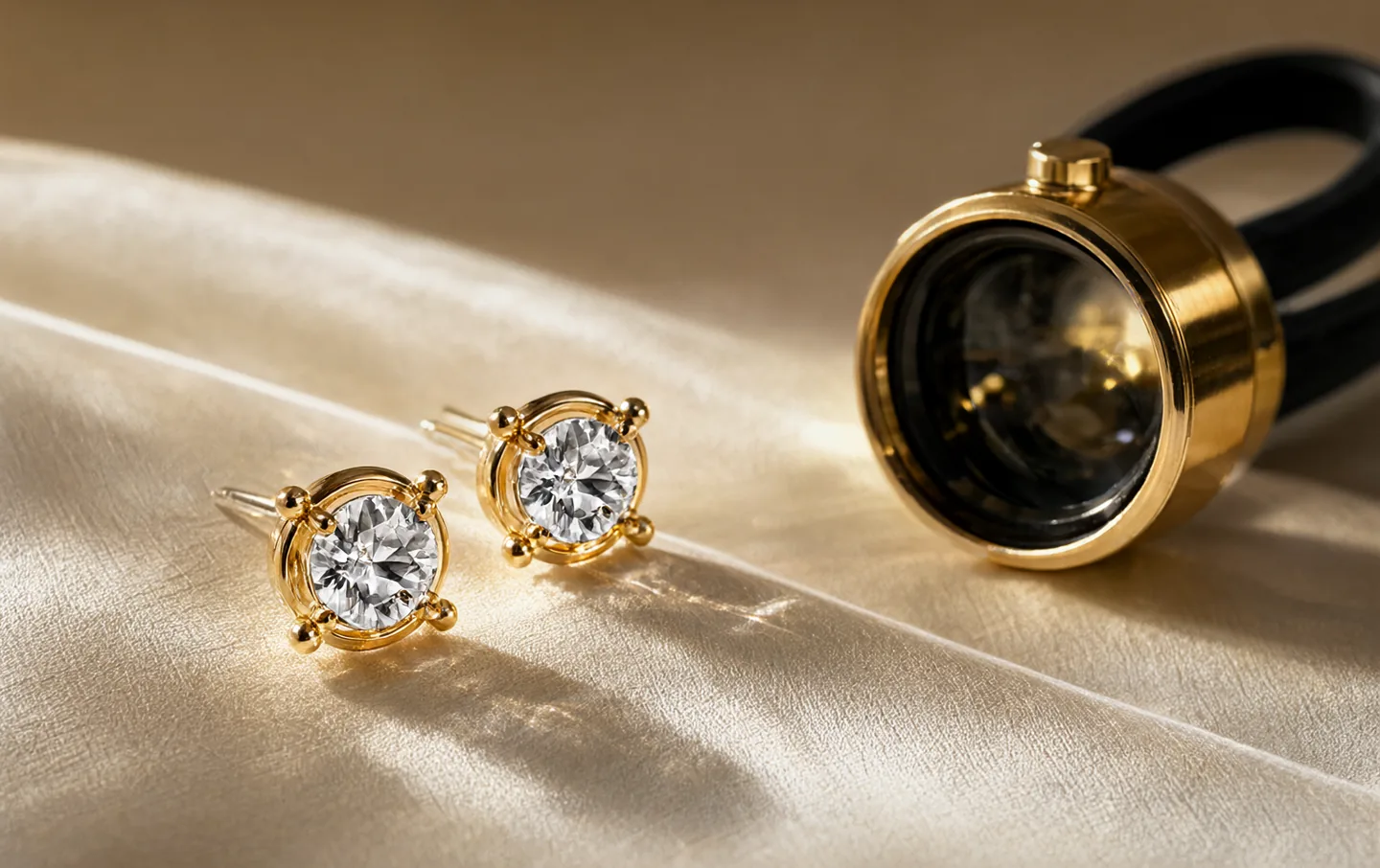
A four-prong setting shows the most stone. A martini setting sits closer to the lobe, which looks tidier on small ears. A bezel surrounds the stone, protects the girdle, and is the most secure choice for anyone who sleeps in earrings.
Push backs are fiddly and easy to lose. Screw backs are secure but slow. La poussière backs use a threaded post and a notched back, a workable compromise. Check that the post is thick enough not to bend. White gold is rhodium plated and will eventually need replating; yellow and rose gold avoid that maintenance.
The short list#
Blue Nile Lab-Grown Diamond Stud Earrings
Best for a well-graded pair without a scavenger hunt
Blue Nile is the least dramatic place to buy diamond studs, which is a compliment. You choose carat, color, clarity, and metal without turning the purchase into a seminar, and the stones come with reports from a named lab.
The limitation is the setting. You are buying a stone in a standard basket, not a piece of jewelry design. If you want a bezel or a martini back, look elsewhere.
What works
- Clear per-stone carat and grading
- Classic four-prong settings
- 30-day return window
- Easy to compare across sizes
What doesn't
- Inventory changes constantly
- Settings are basic rather than refined
- Photos are less detailed than a 360 view
James Allen Lab-Created Diamond Stud Earrings
Best for comparing individual stones
James Allen is built for the person who enjoys the hunt. You can look at the actual stone, read its report, compare proportions, and choose a setting separately. For lab-grown studs, where two pairs at the same price can differ in cut and color, that transparency is worth something.
It is also more work. If you want to be told which pair to buy, Blue Nile is calmer. If you want to know exactly what you are buying, this is the better tool.
What works
- 360-degree images of the actual stone
- Detailed grading and measurements
- Several setting styles
- 30-day returns
What doesn't
- More decisions than most people want
- Prices move with inventory
- Small stones may have limited imaging
Vrai The Stud
Best for a modern setting and recycled gold
Vrai grows its diamonds and makes the jewelry, which gives the brand a coherent look: a thin, precise four-prong setting that sits close to the lobe. The gold is 14k recycled, and the proportions are consistent across sizes.
You pay for that coherence. Dollar for dollar, a stone marketplace will usually beat Vrai on carat. Buy it if you want the pair to look like a piece of design and you are comfortable paying for the setting and the brand's control over the supply chain.
What works
- Clean, low-profile four-prong setting
- 14k recycled gold
- Sizes from subtle to statement
- Consistent proportions
What doesn't
- A premium over comparable stones
- Fewer setting options
- Less price transparency than a marketplace
Brilliant Earth Lab Diamond Stud Earrings
Best for buyers who want provenance details
Brilliant Earth leans into the story behind the stone: where it was grown, how the metal was sourced, and what the brand claims about its supply chain. If that paperwork is part of why you are buying lab-grown, the site makes it easy to find.
The jewelry is competent rather than exceptional. Compare the price against a marketplace pair with the same per-stone weight before deciding what provenance is worth.
What works
- Detailed origin and sustainability information
- Recycled gold options
- Several setting styles
- Named lab grading
What doesn't
- Usually a premium over marketplaces
- Some settings feel light for the price
- Return rules are stricter than they look
Mejuri Lab-Grown Diamond Studs
Best for a first pair of diamond studs
Mejuri's lab-grown studs are the pair to buy when you want the look without the full diamond-retail ritual. They are small, clean, and set in 14k gold, with proportions that suit a second piercing or an understated first one.
The trade is information. You are not choosing a specific stone or reading its plot; you are buying a pair to a specification. Check the per-stone carat carefully, since the pair is often described by total weight.
What works
- Lower entry price
- Simple 14k settings
- Easy everyday proportions
- Reasonable return policy for unworn pieces
What doesn't
- Less detailed stone information
- Small stones may lack individual reports
- Limited upgrade path
Certification, plainly#
IGI and GIA both grade lab-grown diamonds. IGI is the more common report in lab-grown retail. The report should include the stone's measurements, grades, and a number you can look up on the lab's website.
"Certified" without naming the lab means little, and a pair's certificate should cover both stones or each stone separately. Under roughly 0.25 carat each, a full report is uncommon. We will not tell you a specific listing is IGI or GIA certified; certifications change by stone. Check the report number before you pay.
Resale is not the reason to buy#
Lab-grown diamonds have little resale value. That is not a scandal; it is the nature of a manufactured product whose supply can expand. Retailers rarely buy them back, and estate buyers generally will not pay a meaningful fraction of retail. Treat the purchase like a good pair of glasses: something you buy to wear, not to store value.
Fit and care#
Studs sit against the lobe, so the back matters as much as the front. Thin lobes need a shorter post. If you sleep in them, a bezel or a flatter martini setting is kinder than a tall basket.
Clean studs with warm water, a drop of dish soap, and a soft brush. Remove them before swimming; chlorine dulls metal and loosens prongs. Have the prongs checked once a year if you wear the pair daily.
Questions people actually ask#
Are lab-grown diamonds real diamonds?#
Yes. They have the same carbon crystal structure and hardness as mined diamonds. The difference is origin, not composition. A jeweler's tester identifies them as diamonds; a lab report says how they were made.
Do lab-grown studs hold their value?#
No. Resale is a small fraction of retail, and many buyers will not take them at all. Buy the pair you want to wear, at a price you can afford to lose.
What size should I buy?#
For a first pair, 0.25 to 0.40 carat per ear is a good everyday size. For a more visible stud, 0.75 to 1 carat per ear. Diameter is a better guide than carat.
The best pair is the one whose report you understand and whose setting suits your ear.