Jewelry does not usually get lost at home. It gets lost in the bottom of a tote bag, on a hotel nightstand, or in the pocket of a jacket that goes to the dry cleaner. Travel is when small, valuable things are separated from the place they belong.
A dedicated case solves part of the problem. It gives each piece a home, keeps chains from knotting, and makes the morning pack easier. The rest is a habit: one small kit, a fixed place for it, and a rule about what stays home.
We looked at the formats, the materials that actually prevent tarnish, and five cases worth packing.
The short version#
The Wolf Maria Medium Zip Case is the best all-round case if you want one proper piece of kit. Mejuri's travel case is the small, light option. Stackers is the expandable system, Away's jewelry case is the durable one, and Paravel's is the choice if recycled materials matter to you.
Pouches, rolls, and cases#
A pouch is a soft bag, usually with a drawstring or zip. It is light, cheap, and good for one or two pieces, but it offers no structure: chains still tangle and earrings still get crushed.
A roll has slots and small pockets that fold into a cylinder. It is excellent for rings, earrings, and bracelets, and it packs flat. It is less good for long necklaces, which need to be looped carefully or they will kink.
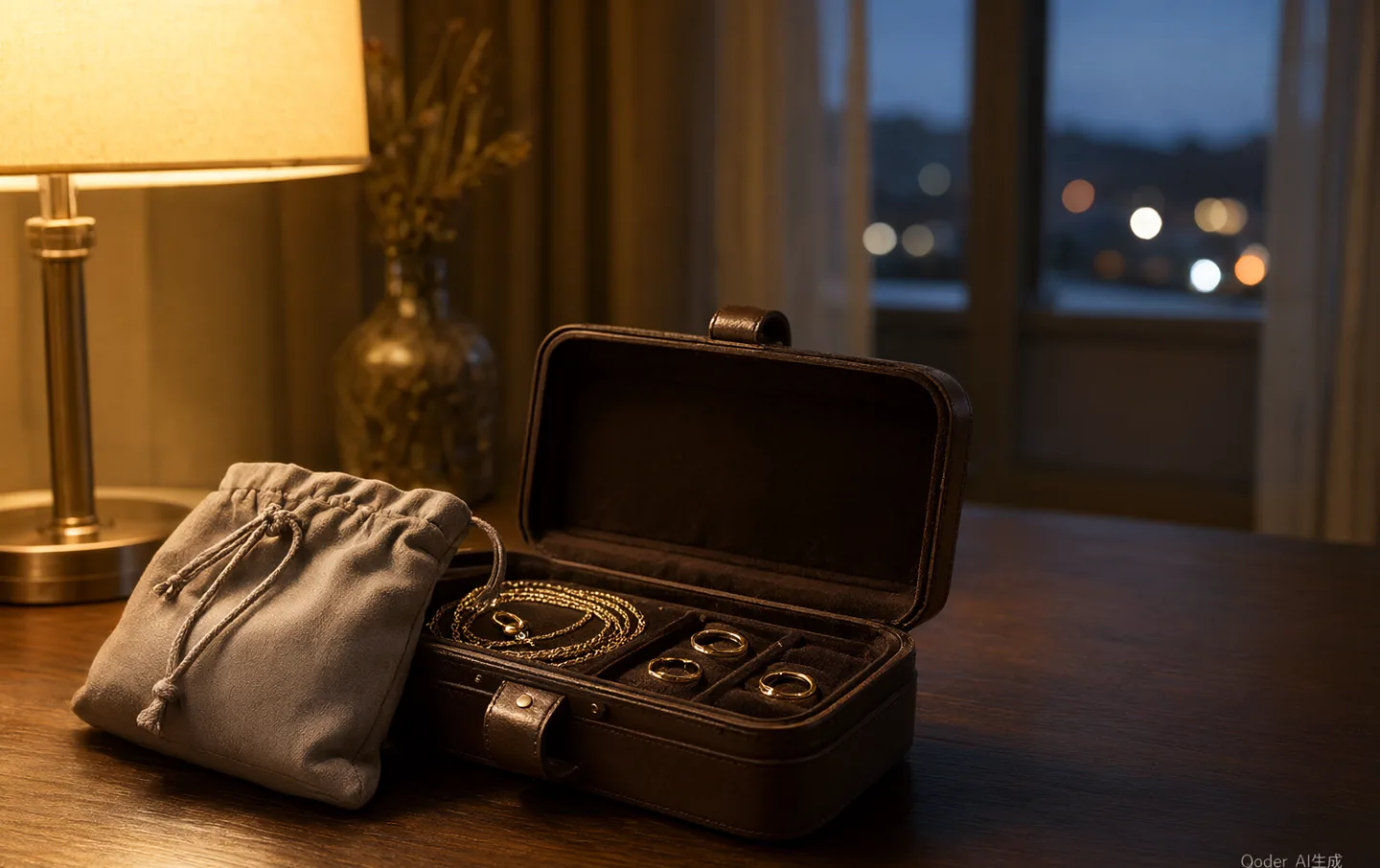
A case is structured, often with compartments, ring rolls, and a zip. It protects more and takes up more space. For a week away with a few pieces, a small case is usually the right answer; for a weekend with one necklace, a pouch is enough.
Why jewelry tarnishes in a suitcase#
Tarnish is a chemical reaction, and travel gives it more to work with: humidity, heat, and the sulfur compounds in rubber, wool, and some plastics. A silver chain left loose in a bathroom bag can go dark in a few days.
Look for a lining described as tarnish-resistant or anti-tarnish, often a treated fabric. A small anti-tarnish strip in the case helps. So does keeping pieces dry and not sealing damp jewelry in a zip bag. Pearls are the exception: they prefer a little humidity and should not be stored in a dry safe.
The one-kit rule#
Pack three pieces: one you wear every day, one that works for the evening, and one that is purely practical, such as a second pair of studs. Everything else stays home. The rule is not about minimalism for its own sake; it is about reducing the number of things that can be left behind.
Wear the most valuable piece in transit rather than packing it. Keep the kit in your carry-on, not a checked bag, and put it in the same place in every hotel room. The nightstand is where earrings go to disappear.
The short list#
Wolf Maria Medium Zip Case
Best for a full kit that lives in a suitcase
Wolf has been making jewelry storage for long enough to know where things go, and the Maria case shows it: ring rolls, a necklace section, and enough structure that nothing arrives crushed. The zip runs smoothly and the lining is treated to slow tarnish.
It is more case than a weekend needs. If you travel with three pieces and a single chain, the size is wasted. If you travel with a small rotation and want it to arrive in the same condition it left, this is the version that earns its price.
What works
- Structured compartments
- Anti-tarnish lining
- Secure zip
- Quilted exterior protects contents
What doesn't
- Expensive
- Bulky for a small bag
- Heavier than a pouch
Mejuri Travel Jewelry Case
Best for a weekend bag and a few pieces
Mejuri's travel case is the size of a small pencil case, which is the point. It holds a couple of rings, a pair of earrings, and one chain, and it slips into a bag without taking over.
It will not protect a structured necklace or a cuff, and the fabric is not especially rugged. For a short trip and a small rotation, that is enough. For a longer trip, a roll or a larger case is more useful.
What works
- Compact
- Simple compartments
- Light
- Easy to keep in a carry-on
What doesn't
- Little structure
- Not enough room for a large necklace
- Fabric shows marks
Stackers Travel Jewelry Case
Best for building a system over time
Stackers is built around the idea that you add trays as your collection grows. The travel case is a compact version of that system: soft-lined, modular, and easy to live with.
The modularity is also the weakness. Separate trays can shift, and small earrings can migrate between sections if the case is not packed tightly. It is a good choice for someone who already uses Stackers at home and wants the same logic on the road.
What works
- Modular trays
- Easy to expand
- Soft-lined compartments
- Good for rings and earrings
What doesn't
- Pieces can shift between trays
- Not fully sealed
- Looks utilitarian
Away Jewelry Case
Best for rough handling and frequent travel
Away's jewelry case is built like the rest of its luggage: tough, simple, and meant to be handled. The exterior shrugs off a packed bag, and the zip keeps everything contained.
Inside, it is more of a general organizer than a jewelry specialist. Chains need to be bagged or looped carefully, and there is no anti-tarnish lining. For a traveler who values durability over compartments, it is a sensible buy.
What works
- Sturdy exterior
- Zip closure
- Compact shape
- Easy to wipe clean
What doesn't
- Limited internal organization
- Bulkier than a pouch
- Not tarnish-specific
Paravel Jewelry Case
Best for travelers who care about materials
Paravel makes travel accessories from recycled materials, and the jewelry case is part of that range: a compact, structured case with a clean exterior and a soft interior.
It is not the most organized case here, and the price reflects the materials and branding as much as the capacity. If you want a small, well-made case and recycled content matters to you, it is a good fit. If you want maximum compartments per dollar, look at Wolf or Stackers.
What works
- Recycled materials
- Compact and structured
- Neutral colors
- Good zip and lining
What doesn't
- Price is high for the capacity
- Organization is basic
- Limited compartments
Airport and hotel habits#
Keep jewelry in your carry-on. Checked bags are delayed, searched, and occasionally lost, and a small case is easy to forget in a seat pocket. If you are asked to remove metal at security, put the pieces in the case first, not in the tray.
At the hotel, do not rely on the safe for anything you would be devastated to lose. Hotel safes are convenient, not invincible, and front-desk storage is often more secure. If you leave jewelry in the room, put it in the case and the case in a drawer, not on the nightstand.
Questions people actually ask#
Can I travel with jewelry in a zip bag?#
For a short trip, yes, but a plain plastic bag traps moisture and does not stop chains tangling. A small pouch inside a zip bag is better. Add an anti-tarnish strip for silver, and never seal a damp piece.
How do I keep chains from tangling?#
Fasten the clasp, loop the chain through a straw or a small cloth sleeve, and lay it flat. In a case, use a dedicated necklace section or a small pouch per chain. Do not coil a fine chain tightly around your fingers; that is how kinks start.
Is it safe to put jewelry in a hotel safe?#
Usually, for short periods, but not for irreplaceable pieces. Hotels often have limited liability for valuables, and safes can be opened by staff. Wear the most valuable piece or leave it at home.
The best travel case is the one small enough that you actually pack it, and structured enough that you do not have to untangle your jewelry at midnight.