Most men who say they do not wear jewelry own a watch. A bracelet is a smaller step than it looks: it sits where the watch sits, it does not require a pierced ear or a ring size, and it can be taken off when the situation calls for it.
The trouble is the market. Men's bracelets tend to arrive in two flavors: a leather cuff with a logo the size of a coin, or a chain heavy enough to anchor a small boat. Neither is useful if you want something you can wear to work without thinking about it.
The short version#
The Miansai Nexus Rope Bracelet is the easiest first bracelet. The Tom Wood Bangle is the quiet metal option. Mejuri's box chain is the one for an office. The David Yurman Cable Bracelet is the known quantity, and the Miansai Cuban Chain is for when you want weight.
Scale is the whole game#
A bracelet's width should relate to the wrist, not to the wearer's personality. On an average wrist, 4mm to 6mm reads as subtle, 8mm starts to look like a statement, and anything above 10mm is a deliberate choice.
Length matters as much as width. Measure your wrist just below the wrist bone with a soft tape, then add 1cm to 1.5cm for a bracelet that moves. A chain should drape slightly; a cuff should sit still.
Materials and closures#
Sterling silver is the most versatile metal: bright enough to look intentional, neutral enough to wear with a watch. It tarnishes, but a polishing cloth handles that. Solid gold costs several times more and is warmer in color; plated brass will not last on a bracelet that knocks against everything.
Leather and cord are quieter and lighter, and they age in a way metal does not. They are also the least formal. A waxed cotton bracelet with a silver clasp is a good vacation piece; it is not the thing to wear to an interview.
The closure decides whether you actually wear it. A lobster clasp is secure but can be fiddly one-handed. A box clasp looks cleaner. A toggle is easy on and off but can catch on a sleeve. A magnetic clasp is convenient and the first thing to fail. Try to close it with one hand before committing.
The sleeve test#
A bracelet that catches on a shirt cuff will be removed by lunch. Flat links, a smooth clasp, and a close fit help. If you wear a watch on the left wrist, put the bracelet on the right, or choose a narrow band that sits beside the watch without scratching it.
Workplace norms have loosened, but a heavy chain still reads as a choice. A cord bracelet, a slim chain, or a plain bangle disappears under a sleeve, which is usually the goal for a first piece.
The short list#
Miansai Nexus Rope Bracelet
Best for a first bracelet that does not feel like jewelry
The Nexus is a waxed cotton cord with a sterling silver clasp, about as unthreatening as a bracelet gets. It looks like something you picked up on a trip, which is a compliment. The adjustable closure means you can get the fit right without guessing.
The cord is the wear item. It will soften, fray, and eventually need replacing, and it does not belong in a pool or a formal setting. At this price, it is a reasonable first step.
What works
- Light on the wrist
- Adjustable cord closure
- Sterling silver clasp
- Works with casual clothes
What doesn't
- Cord frays over time
- Not formal enough for a suit
- Water and sweat shorten its life
Tom Wood Bangle
Best for a bracelet with no clasp to fail
Tom Wood's bangle is a closed circle of silver with a slightly flattened profile, and it solves the closure problem by not having one. You slide it on, and it stays. The shape is simple, and the silver picks up a soft patina rather than looking damaged.
The fit is the risk. A bangle has to pass over the widest part of your hand, so measure that, not just your wrist. If your hand is much wider than your wrist, a bangle will either be too tight to put on or loose enough to slide off.
What works
- Solid sterling silver
- No closure to break
- Sculptural but plain
- Ages with a patina
What doesn't
- Must fit over the hand
- Can slide off a narrow wrist
- Clanks against a desk
Mejuri Men's Box Chain Bracelet
Best for wearing under a shirt cuff
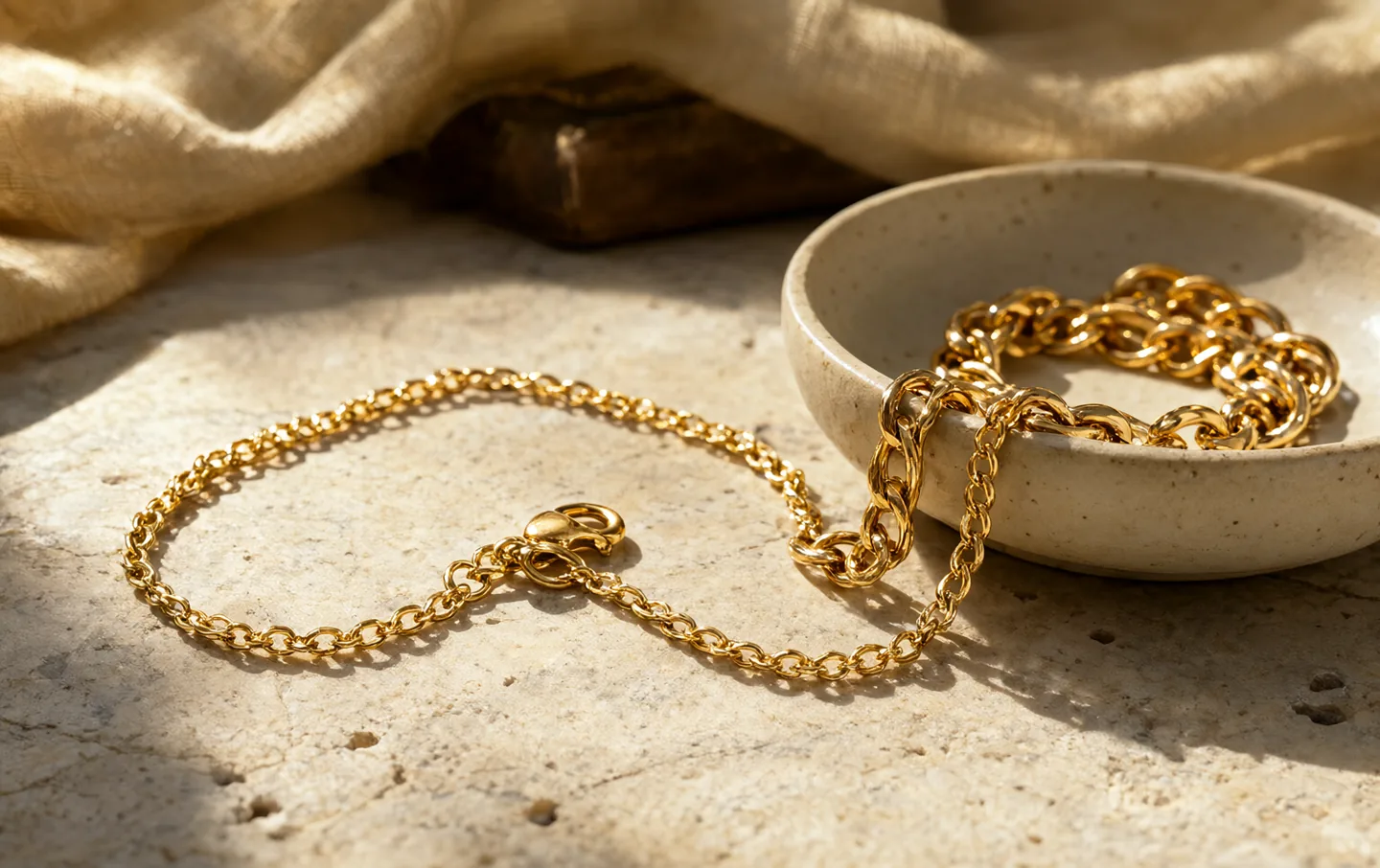
A box chain is the most office-compatible chain there is: square links that lie flat, no edges to catch a cuff, and a quiet shine. Mejuri's version is simple and well proportioned, with a lobster clasp that stays closed.
It is not a bracelet for someone who wants to be noticed. The links are fine, the weight is modest, and it disappears under a sleeve. That is exactly why it works as a daily piece. Check the length against your wrist; a box chain does not stretch.
What works
- Flat, low-profile links
- Sterling silver
- Secure lobster clasp
- Does not catch on knitwear
What doesn't
- Fine gauge can kink
- Clasp is small for large fingers
- Not a statement piece
David Yurman Cable Bracelet
Best for a recognizable classic in sterling silver
The cable bracelet is the piece David Yurman built a business on: a twisted silver rope with a sculpted end, usually worn loose. It has been around long enough that it no longer reads as trendy, which is useful if you want one bracelet that works for years.
You are paying for the design and the name as much as the silver. If you want metal weight per dollar, a plain bangle is the better buy. Try the width on before buying; the thinner versions are easier to wear daily.
What works
- Solid sterling silver
- Signature twisted cable
- Available in many widths
- Holds value better than fashion jewelry
What doesn't
- Expensive for the metal
- Very recognizable
- Hinged versions need care
Miansai Cuban Chain Bracelet
Best for a visible chain with a secure clasp
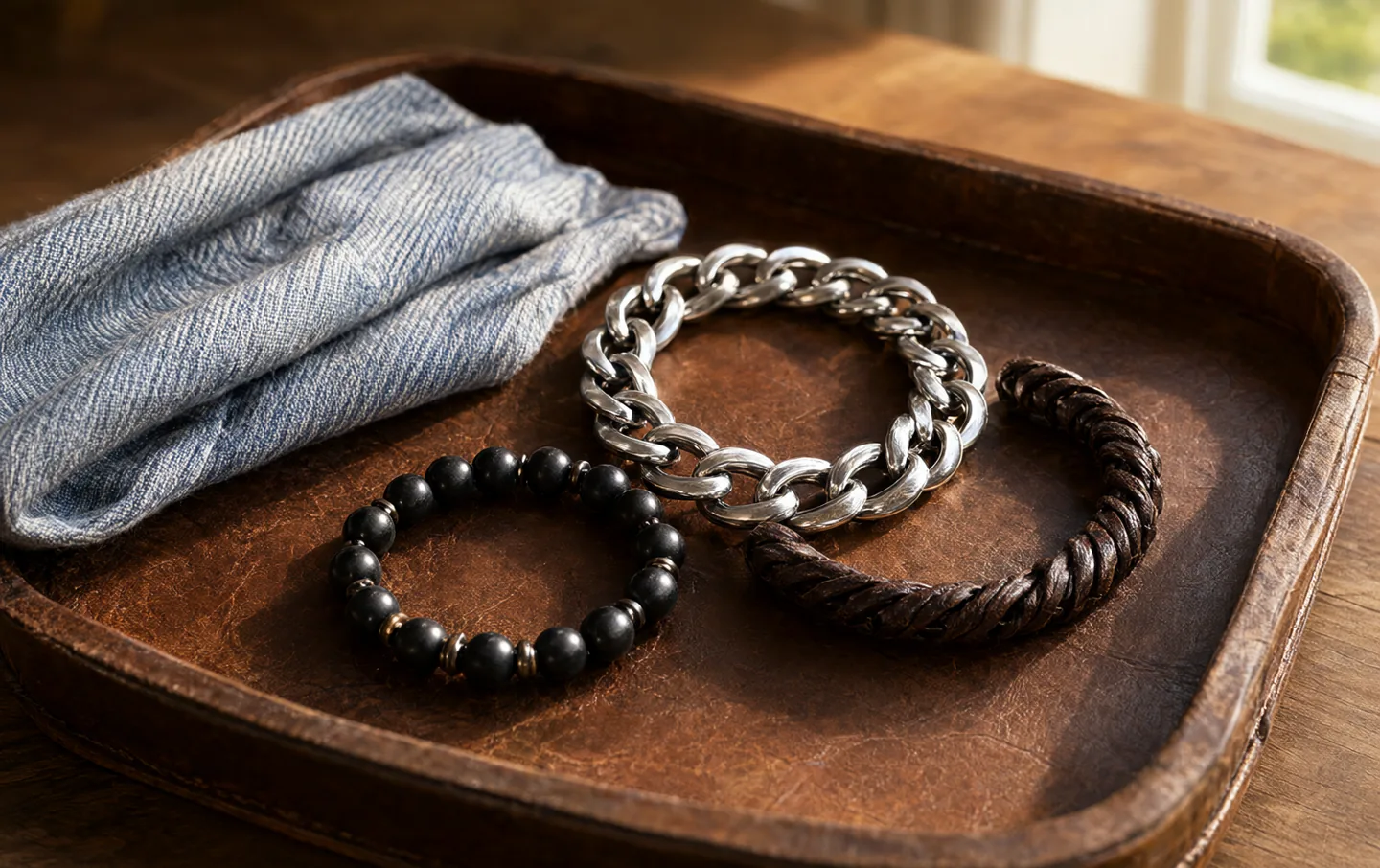
Miansai's Cuban chain is the bracelet for someone who has decided they like jewelry. The links are flattened and interlocking, so the chain lies against the wrist and catches light without looking fussy. The box clasp is more secure than a lobster clasp at this weight.
It is a lot of bracelet. On a narrow wrist it can feel like a handcuff, and it will rub against a watch case. Wear it on its own, or accept that it will be the loudest thing you have on.
What works
- Substantial links
- Sterling silver
- Secure box clasp
- Good with a watch
What doesn't
- Heavy on a small wrist
- Formal in a very specific way
- Can scratch a watch case
Sizing and care#
Measure your wrist with a soft tape, add 1cm for a close fit or 1.5cm for drape, and check the brand's stated length rather than assuming. A bracelet that is too long will slide over the hand; too short will leave a mark. For bangles, measure the widest part of your hand with your thumb tucked in.
Silver bracelets can be polished with a soft cloth. Avoid wearing them in chlorinated water or while lifting weights, and store them dry. Cord bracelets should be kept out of water entirely. If a clasp starts to feel loose, have it tightened before it opens on its own.
Questions people actually ask#
Can I wear a bracelet with a watch?#
Yes, but put them on opposite wrists if you care about scratches. Two metals on the same wrist will rub, and a heavy chain can scuff a watch case. If you want both on one wrist, choose a narrow, smooth bracelet.
Is a silver bracelet appropriate at work?#
In most offices, yes, if it is slim and quiet. A cord bracelet or fine chain disappears under a sleeve. A heavy chain is a style choice, not a dress-code violation, but it will be noticed.
How do I know my bracelet size?#
Measure your wrist just below the bone with a soft tape, then add 1cm to 1.5cm. If you are buying a closed bangle, measure the widest part of your hand instead. A bracelet should move a little, not spin freely.
The best bracelet is the one you forget you are wearing until you take it off at night.