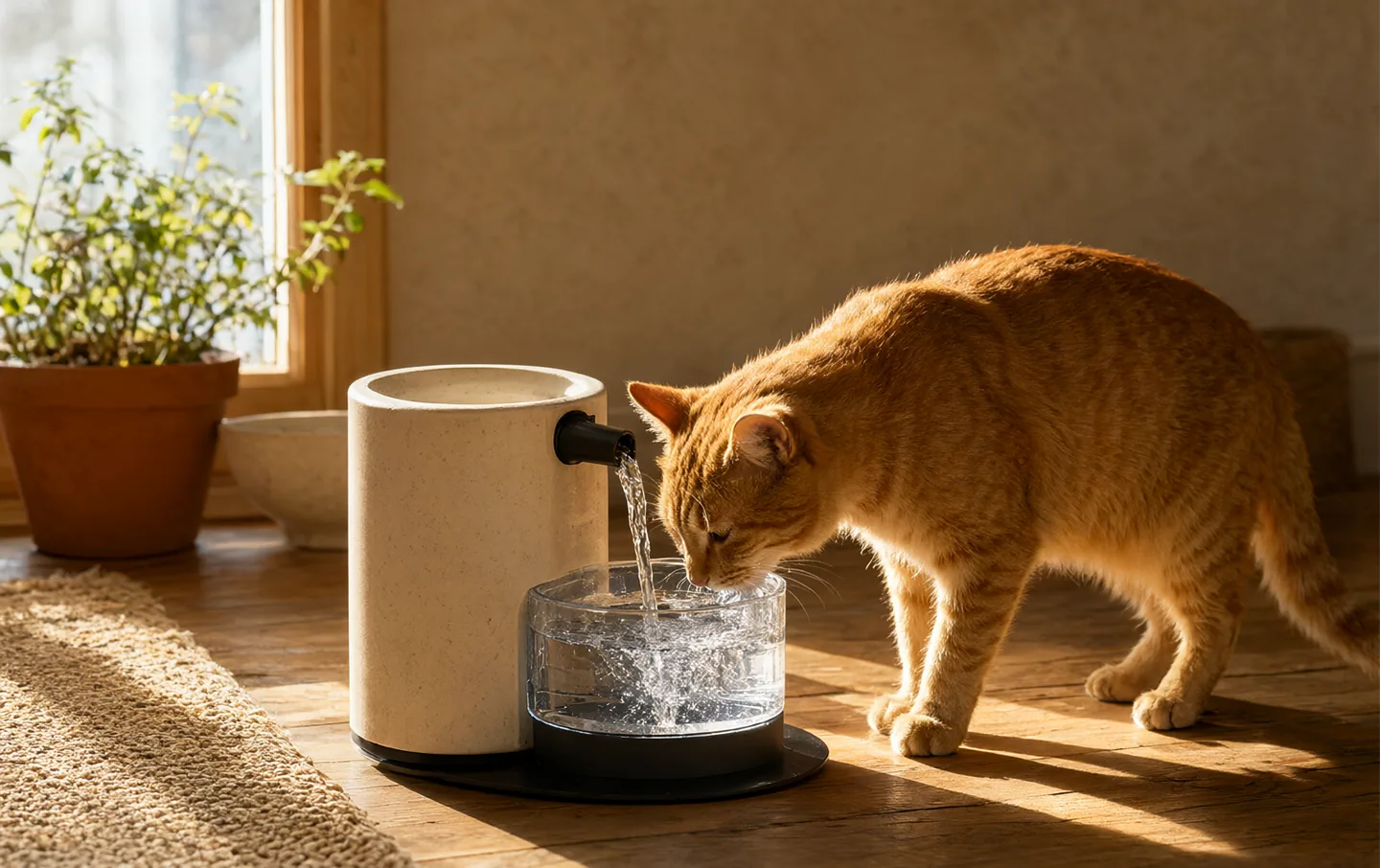
A cat water fountain is a small appliance that sits in water. That is the whole problem. The pump, the filter, the seams, and the cord all need attention, and a fountain that is not cleaned regularly is worse than a plain bowl.
We looked at materials, capacity, noise, filter costs, and how hard each fountain is to take apart. We are not making health claims about hydration. A fountain can make water more appealing to some cats, and that is the extent of the promise.
The short version#
The Petlibro Dockstream is the fountain we would buy for most homes. The Catit PIXI is the small, simple option, the PetSafe Drinkwell is the big plastic workhorse, the Pioneer Pet Raindrop is the stainless pick, and the PetSafe Pagoda is the ceramic one.
The short list#
Petlibro Dockstream Water Fountain
Best for most homes and app-minded owners
The Dockstream gets the parts that touch water right. The tray is stainless steel and goes in the dishwasher, the pump is quiet enough to live in a kitchen, and the app logs how often the fountain is used. The water surface is wide, so a cat can drink without pressing their whiskers against a wall.
The app is more novelty than necessity, and it only tells you that a cat visited, not which cat. Filters and pump cleaning are ongoing costs. The body is plastic even though the tray is steel. If you want one fountain that is easy to live with, this is it.
What works
- Stainless steel drinking tray
- Very quiet pump
- Dishwasher-safe tray
- App tracks visits
What doesn't
- App setup can be fussy
- Filters are a running cost
- Body is still plastic
- Pump needs regular cleaning
Catit PIXI Water Fountain
Best for small apartments and one cat
The PIXI is the fountain for a kitchen counter with no room to spare. It holds enough water for a cat or two for a couple of days, the pump is quiet, and the filter cartridge is easy to swap. The design is friendly without being a cartoon.
The capacity is the limitation. A cat who drinks a lot, or a household with two cats, will be refilling it often. The plastic shows water marks, and the pump has small parts that need a brush. It is a good first fountain, not a forever fountain.
What works
- Compact footprint
- Triple filtration
- Quiet operation
- Cute, simple design
What doesn't
- Small capacity
- Mostly plastic
- Filters need frequent changes
- Pump is fiddly to clean
PetSafe Drinkwell Platinum Fountain
Best for multi-cat homes and large dogs
The Drinkwell Platinum is the fountain that has been in a million homes. It holds a lot of water, the flow is adjustable, and the replacement filters are easy to find. For a multi-cat house or a dog who shares the fountain, the capacity is the point.
It is plastic, and the reservoir and bowl have seams where biofilm collects. The pump is not silent, and the whole thing takes up counter space. It is a reliable, unglamorous appliance that needs a weekly tear-down.
What works
- Large capacity
- Adjustable flow
- Widely available filters
- Sturdy base
What doesn't
- Plastic reservoir
- Bulky footprint
- Pump can hum
- Lots of parts to clean
Pioneer Pet Raindrop Stainless Steel Fountain
Best for cats who prefer metal and easy cleaning
The Raindrop is a stainless steel bowl with a pump and a gentle stream. The metal does not hold odours the way plastic can, and the bowl goes in the dishwasher. It is the fountain to choose if you have had a plastic one go slimy and never want to deal with that again.
Stainless is heavy when full, and the pump is audible in a quiet room. The filter still needs changing, and the pump still needs cleaning. It is not maintenance-free; it is maintenance you can see.
What works
- Stainless steel body
- Bowl is dishwasher safe
- Simple shape
- No plastic taste
What doesn't
- Heavy when full
- Pump noise is noticeable
- Filter changes add up
- Few colour options
PetSafe Drinkwell Pagoda Ceramic Fountain
Best for a fountain that looks like a bowl
The Pagoda is ceramic, which means it looks like a piece of pottery rather than a pet appliance. The glaze wipes clean, the pump is quiet, and the twin streams are gentle. It suits a kitchen where the fountain is on display.
Ceramic is heavy and can chip or crack if it is dropped. The capacity is smaller than the Drinkwell, and the price is higher than plastic. The pump and filter still need the same weekly attention. Buy it for the material and the look, not for lower maintenance.
What works
- Ceramic body
- Quiet pump
- Easy to wipe
- Looks good in a kitchen
What doesn't
- Heavy and fragile
- Small capacity
- Pricier than plastic
- Pump still needs cleaning
Cleaning reality#
Every fountain needs a weekly partial clean and a monthly deep clean. Take it apart, remove the pump impeller, scrub the housing with a bottle brush, and wash the bowl. Biofilm forms on every wet surface, and a filter does not stop it.
Filters are not optional. They collect hair and grit, and a clogged filter slows the flow and makes the pump work harder. Buy a pack of replacements when you buy the fountain, and note the interval on your calendar.
Ceramic, stainless, or plastic#
Stainless steel is the most durable and the least likely to hold odours. Ceramic is easy to wipe and looks better, but it is heavy and can break. Plastic is cheap and light, but it scratches, and scratches give biofilm somewhere to grow. If you are buying once, stainless is the safe choice.
Noise, cords, and cats who ignore it#
A quiet pump matters more than a pretty stream. Read the noise comments, not the marketing copy. Keep the cord away from the water bowl and out of reach of a cat who chews; a cord cover or a cordless fountain solves the problem. Plug into a GFCI outlet if the fountain is near a sink.
Some cats prefer still water. If yours ignores the fountain, try a plain bowl in the same spot, or move the fountain away from the food and litter. A fountain is an option, not a requirement. If you are worried about how much your cat drinks, talk to your vet rather than buying another appliance.
Questions people actually ask#
How often should I clean a cat fountain?#
Rinse and refill every few days, clean the bowl and pump weekly, and take the whole thing apart monthly. If the water feels slimy or smells, clean it now.
Do cat fountains use a lot of electricity?#
Very little. The pump is small, often under five watts, and the running cost is minor compared with filters. The bigger cost is the filter replacements.
Why won't my cat use the fountain?#
The pump may be too loud, the stream too strong, or the fountain too close to food or litter. Some cats simply prefer a bowl. Try a quieter setting and a different spot before giving up.